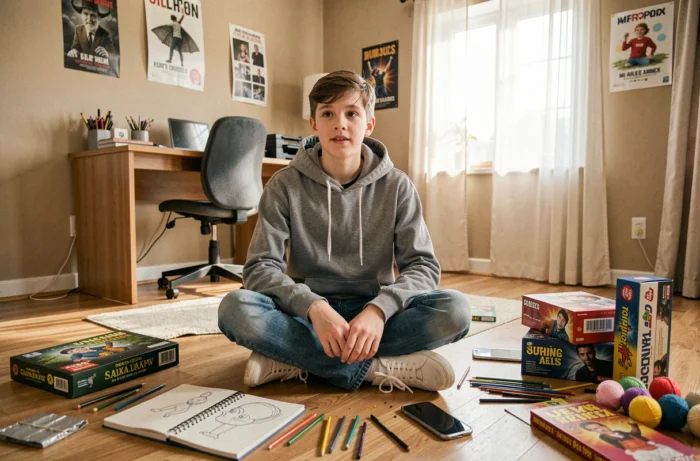
A 14-year-old typically has large amounts of free time at home, especially during holidays. Since July 21, 2026, French law prohibits access to social networks for those under 15, which effectively reduces some usual digital leisure activities. Finding suitable home activities for this age group then becomes a practical issue, not just educational advice. Here are ten concrete ideas that can be done without expensive materials or complex organization.
1. Create a short film with a smartphone
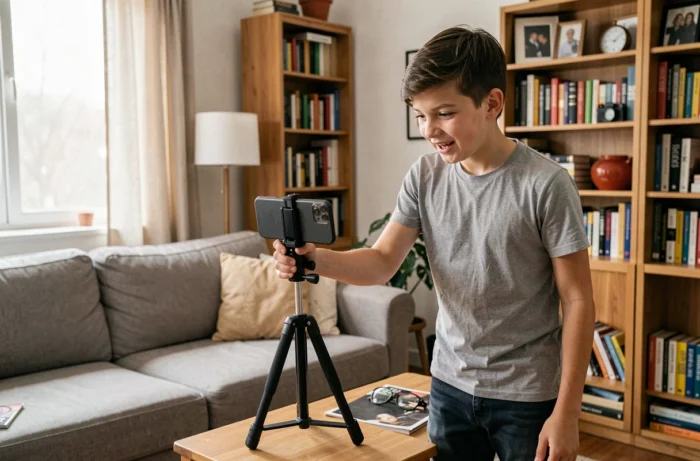
Instead of limiting the smartphone to passive consumption, turning it into a creation tool changes the game. Writing a short script (two to three minutes), filming in the rooms of the house, and editing the result with a free app like CapCut engages multiple skills at once.
Framing, natural light, angle choices: these technical concepts are learned quickly and yield visible results. The activity can occupy an entire afternoon, from writing to final editing.
Other home activity ideas for a 14-year-old can be found on Clarity News, with additional suggestions based on interests.
2. Start a personalized recipe book
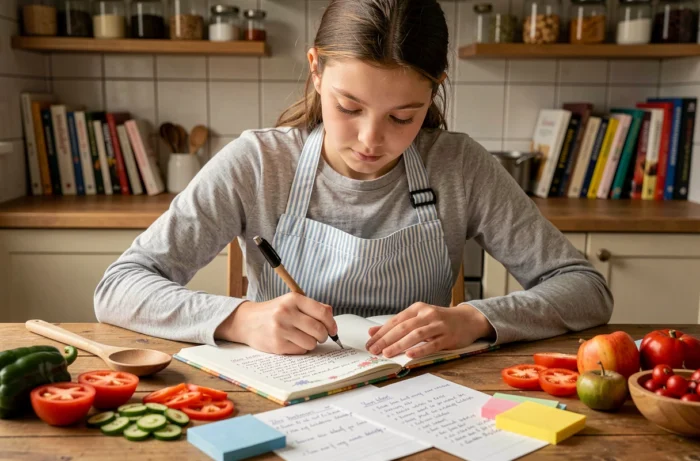
Cooking a dish from start to finish alone, then noting the recipe in a dedicated notebook with personal adjustments, transforms a simple meal into a project. At 14, most teens can manage an oven and handle a kitchen knife without constant help.
Choosing one recipe per week and repeating it until mastered provides visible progress. The notebook accumulates versions, failures, and successes. It’s also an activity that produces a concrete and shareable result at dinner.
3. Organize a board game tournament solo or in pairs
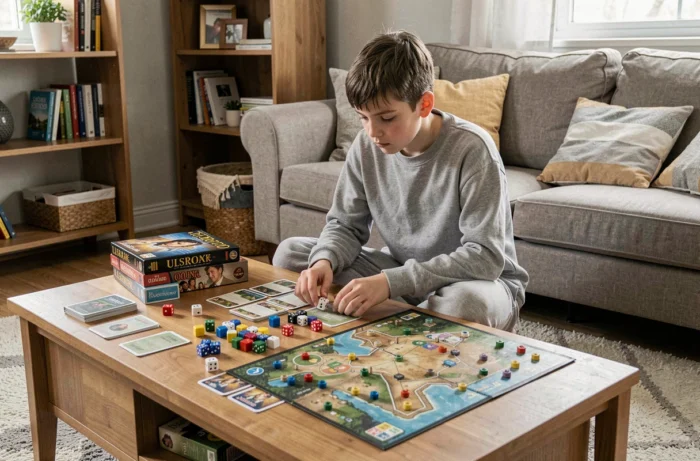
Board games don’t necessarily require four players. Games designed for one or two participants exist in all ranges: investigations, strategy, resource management. A tournament over several days, with a scored ranking, adds a challenge.
The interest for a 14-year-old lies in the progressive challenge mechanism. Increasing the difficulty from one game to the next maintains engagement without screens, sometimes for several hours.
4. Learn line drawing with paper tutorials
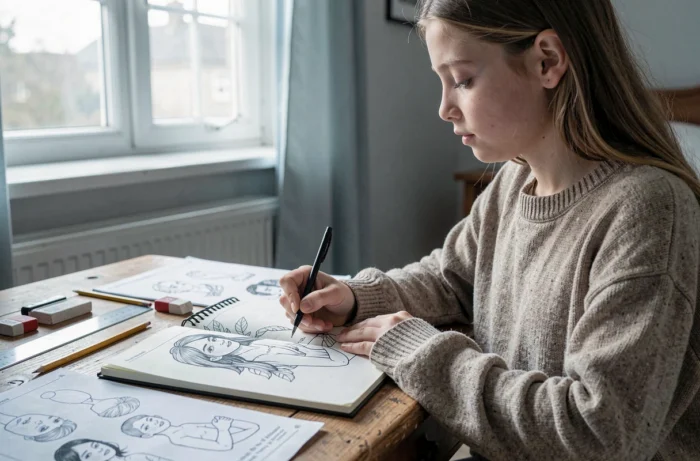
A pencil, an eraser, and a notebook are enough. Line drawing (contour without shading) is an accessible technique that yields quick and rewarding results. Progressive methods exist in library books, with no need for a graphic tablet.
Reproducing everyday objects (a shoe, a cup, a corner of the room) trains observation. It’s a quiet activity, compatible with background music, and requires no financial investment.
5. Build a model from recycled cardboard
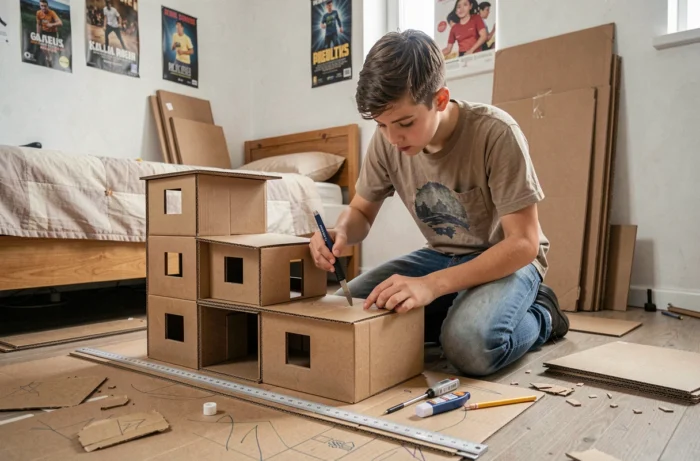
Packaging cardboard, tape, and a cutter are enough to build a model of a house, vehicle, or fictional setting. Recycled cardboard is an underrated building material: rigid, cuttable, free.
The project can last from a few hours to several days depending on ambition. Adding acrylic paint or colored paper allows for a polished finish. For a teen who loves video games, recreating a location from their favorite universe provides a motivating goal.
6. Write a short story or a creative journal

Creative writing isn’t limited to school assignments. Keeping a journal where one invents characters, dialogues, or micro-fictions transforms the exercise. No length constraints, no grades: the freedom of format changes the perception.
A creative journal combines text, sketches, and collages, distinguishing it from a traditional diary. The teen creates a personal, leafable object that evolves over the weeks.
7. Rearrange and redecorate their room
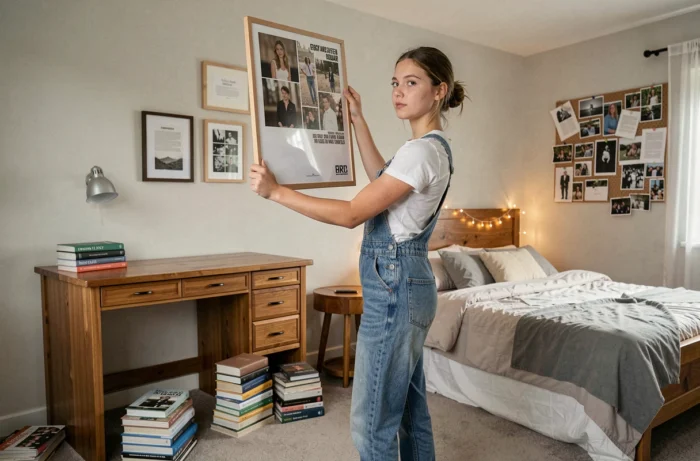
Moving furniture, reorganizing shelves, hanging new posters, or creating a photo wall: rearranging their room is a physical and creative activity that yields immediate results. At 14, the desire for a personal space that reflects their tastes is often strong.
The activity can include sorting out unused items, freeing up space. Setting a limited (or zero) budget for decor forces improvisation with what is available at home.
8. Practice an instrument with free resources
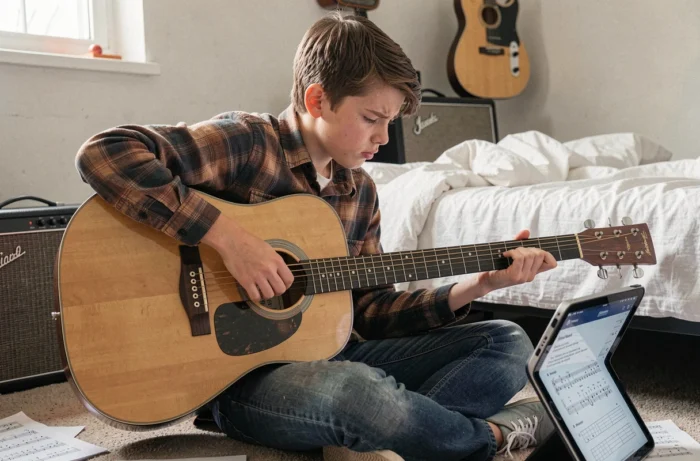
If an instrument is lying around the house (guitar, keyboard, ukulele), video tutorial channels allow learning specific pieces right from the first session. Aiming for a specific piece rather than a complete method keeps motivation high.
Learning the chords of a song they already listen to creates a direct link between effort and pleasure. Three chords are enough to play dozens of pop songs. The activity can be practiced entirely independently, at the teen’s own pace.
9. Organize a musical blind test for the family
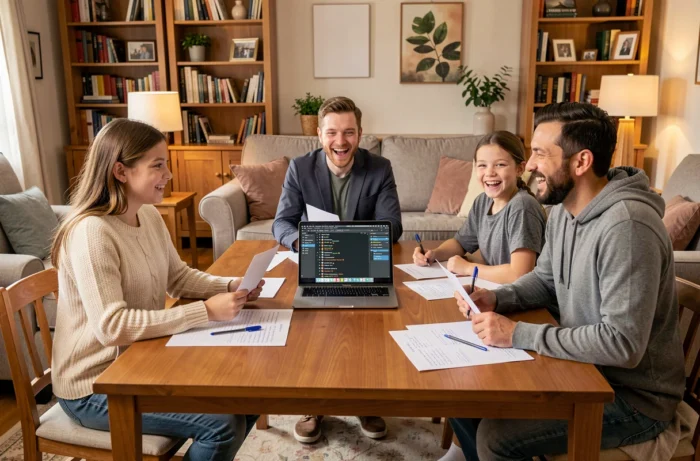
Preparing a blind test requires work upfront: selecting excerpts, defining categories (decades, genres, movie themes), preparing a points system. The teen shifts from participant to organizer, changing the dynamic.
- Select about fifteen excerpts of varying lengths to maintain suspense
- Mix well-known songs from the whole family with more obscure titles to create surprises
- Assign bonus points for the artist and year, not just the title
The blind test is prepared alone and played in a group. It’s a two-part activity that can easily occupy half a day in total.
10. Start a themed photo challenge at home
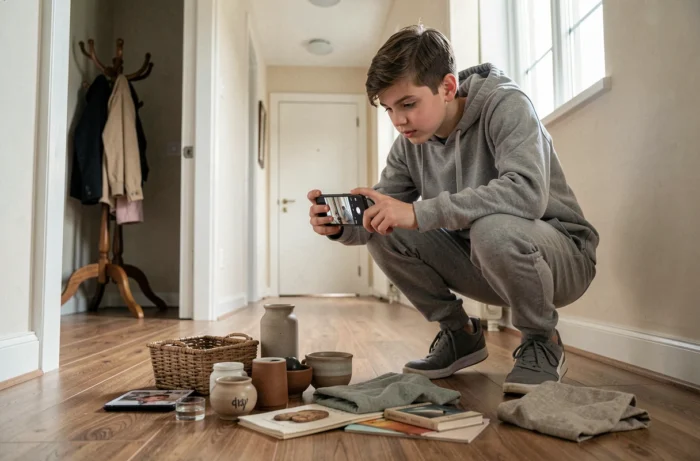
One theme per day (textures, reflections, shadows, dominant colors) and a smartphone are enough to explore creative photography without leaving home. The theme constraint forces a different perspective on their environment.
Limiting each session to ten photos requires selection, framing, and retrying. The teen can then create a gallery in a shared folder or print their best images. This activity also works as a challenge among friends at a distance, with each sending their best photo of the day.
Most of these activities cost nothing and require no parental preparation. With the recent restriction on social network access for those under 15, these alternatives are no longer just advice: they address a concrete gap in the daily life of a 14-year-old at home.