
Sending a virtual bon voyage card is like slipping a word of encouragement into someone’s pocket just before they leave. The message is as important as the visual. A flat text (“have a good trip, have fun”) gets lost in the sea of notifications. A well-thought-out text, on the other hand, stays in memory until their return.
Here are ten concrete formulations, each tailored to a specific situation, so that your virtual bon voyage card truly touches the person receiving it.
1. The playful word for a close friend

With a friend, a formal tone sounds off. Opt for a short phrase that recalls a shared memory or a recurring joke between you.
Example: “Go far, come back tanned, and bring me a ridiculous fridge magnet. I already miss you, but your photo album will comfort me.” This type of text works because it is personal and impossible to copy-paste for someone else.
You can also explore other templates on this virtual bon voyage card on Voyager en Découverte to vary inspirations according to your recipients.
2. The tender phrase for a couple taking off

When two people are leaving together, the message should address the duo rather than each separately. Avoid the generic “enjoy yourselves both.”
Example: “May this trip bring you sunsets together, laughter at breakfast, and at least one photo where you look as beautiful as the landscape.” The key here is to evoke concrete scenes rather than an abstract wish.
3. The reassuring text for parents traveling with family

Traveling with children involves logistics. The ideal message acknowledges this effort and wishes for rest as much as adventure.
Example: “Safe travels to the whole tribe! May the kids sleep on the plane, may the luggage arrive on time, and may you find a restaurant that everyone likes on the first night.” This tone shows that you understand their daily life.
4. The travel quote rewritten in your style

Travel quotes are everywhere, and most have become clichés. Instead of copying a famous phrase alone, add your own comment after the quote.
Example: “‘Travel is the only thing you buy that makes you richer.’ And you deserve to come back a millionaire of memories. Enjoy every minute.” The quote serves as a hook, your personal phrase gives the heart of the message.
5. The humorous word that relaxes before departure
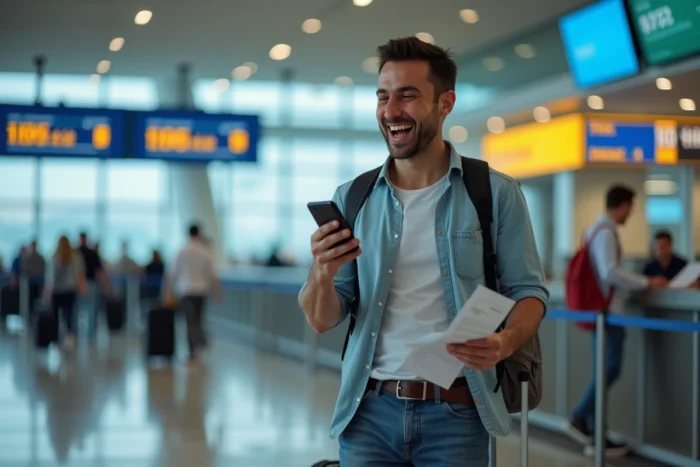
Have you noticed that funny messages are the ones we reread the most often? Humor de-dramatizes the stress of departure and sticks in memory.
Example: “Bon voyage! Don’t forget: if you get lost, it’s an adventure. If you lose your suitcase, it’s shopping. In both cases, you win.” Laughter works as long as you remain kind and avoid sensitive topics like flight delays or fear of flying.
6. The sincere message for a colleague on a business trip

A business trip is not a vacation. The tone should remain warm without being familiar. Show that you recognize the effort of the trip.
Example: “Safe travels and good luck on your mission. Enjoy the journey to unwind a bit, you deserve it. We’ll hold down the fort here, come back with good news.” This message works because it mixes professional encouragement with human attention.
7. The poetic wish in three lines

Some recipients appreciate a more literary tone. Three lines are enough to create a small prose poem without falling into the pompous.
Example: “May the road open before you like a blank page. May each stop bring you a story to tell. And may the return be as sweet as the departure was exciting.” Three parallel phrases, a regular rhythm: the repetition of ‘may’ creates a natural musicality.
8. The minimalist text that says a lot in few words
No need to write an entire paragraph. Sometimes, a single well-chosen sentence carries more weight than a long speech.
Example: “Travel light, come back rich.” Six words. The recipient immediately understands: wealth of experiences, no baggage. This format is particularly suitable for virtual cards sent via instant messaging, where the short text can be read at a glance.
9. The eco-friendly message for a conscious traveler

The ecological angle is rarely exploited in travel cards. Digital ecology guides remind us that even sending an email has a carbon impact, especially with heavy attachments.
Example: “I’m sending you this virtual card to travel light on the planet too. Discover, breathe, and bring back more memories than in your suitcase.” This text appeals to travelers sensitive to their footprint and shows that choosing a virtual card is already a thoughtful gesture.
10. The farewell word for a long trip or a world tour

When someone leaves for several months, the message takes on a different dimension. It’s important to acknowledge the courage of departure without dramatizing the absence.
Example: “You’re off to explore the world, and the world is lucky. Send us news when you can, we’ll be here at every time zone. Safe travels, we’re counting the days until your stories.” This text works because it values the traveler while maintaining the connection.
Whatever tone you choose, the common thread remains the same: a good virtual bon voyage card text speaks about the recipient, not about the trip in general. Slip in a personal detail, adapt the tone to your relationship, and your message will have more value than a plane ticket.