Electric family cars do not form a homogeneous category. A couple with two young children who charges at a home wallbox does not have the same constraints as a family of five living in an apartment without a charging station, heading to the ski slopes every winter. This ranking orders ten models according to their relevance for real family use, crossing usable cargo volume, winter battery performance, and compatibility with different charging profiles.
1. Kia EV9 – the only truly usable seven-seater
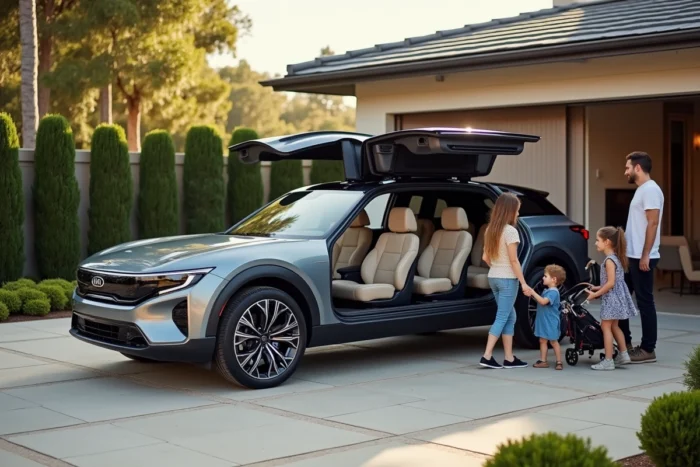
The Kia EV9 is the only electric SUV on the market whose third row comfortably accommodates adults. Families with three or more children simply have no credible alternative of this size in the electric segment.
Its E-GMP platform allows for fast DC charging, minimizing stops on the highway. In winter, the loss of range remains contained thanks to the standard heat pump. We recommend the long-range battery version for vacation trips, where the weight of the load penalizes the entry-level versions more.
To establish a comparison of electric family cars that is relevant, the EV9 serves as a high reference: every model is measured against its actual third-row habitability.
2. Tesla Model Y Juniper – versatility proven by use
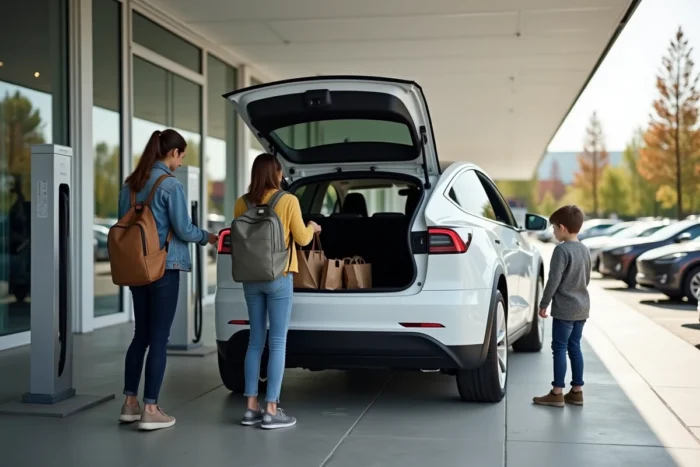
The Model Y Juniper remains the rational choice for a family of four. Its dense Supercharger network in Europe reduces the stress of long trips, a criterion that technical specifications do not measure.
The combined rear trunk and frunk offer sufficient volume for two strollers or ski equipment for a family with two children. The Juniper update improves sound insulation, a point that was among the recurring complaints from families about the previous generation.
3. Volkswagen ID.7 Tourer – the missing estate in the segment
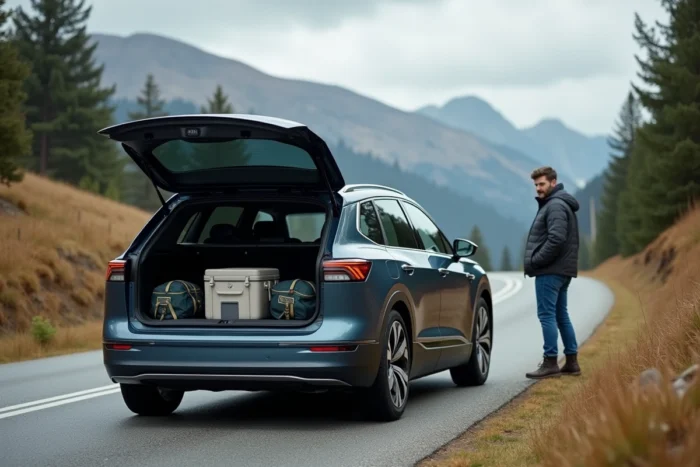
First electric estate from a European mass-market manufacturer, the ID.7 Tourer offers a flat loading floor and a low trunk threshold. For families prioritizing trunk volume over ground clearance, this format surpasses any SUV.
The WLTP range is among the best in the segment, and actual consumption on the highway remains consistent with the announced figures. However, the absence of a third row limits it to families of four at most.
4. Renault Scénic E-Tech Electric – the revamped MPV format
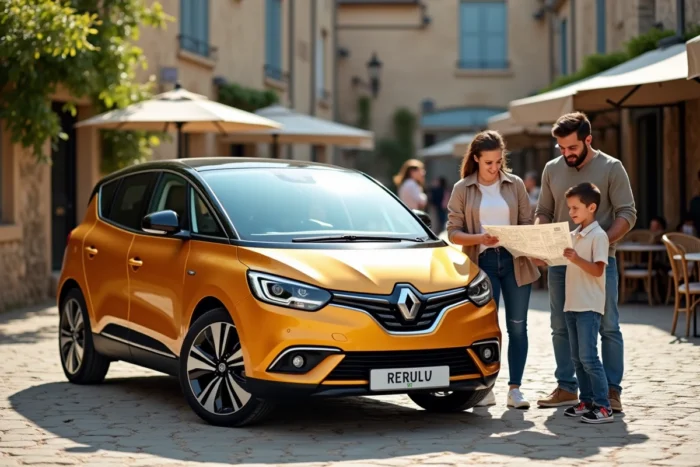
Renault has repositioned the Scénic as a compact crossover, but the MPV DNA persists in the interior layout. Integrated storage and the modularity of the bench seat remind families of what they appreciated in thermal MPVs.
The Scénic is particularly suited for daily urban and suburban trips (school, activities). Its battery can cover a week of school runs without intermediate charging for most households equipped with a wallbox. Families in apartments will need to plan for weekly public charging.
5. Peugeot e-5008 – seven seats on paper, five in reality
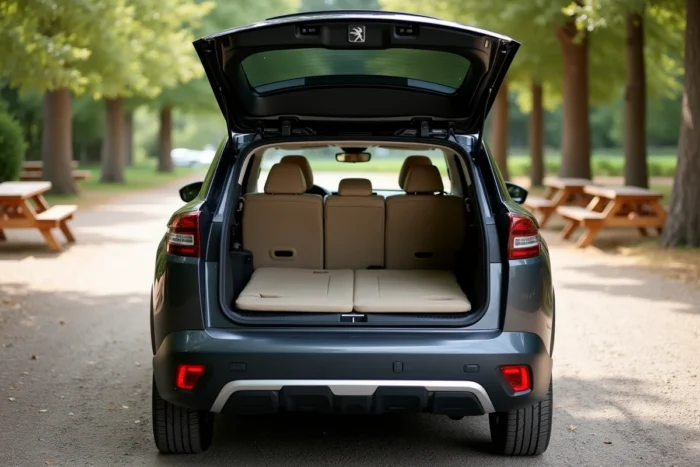
The e-5008 boasts seven seats, but we observe that the third row is only suitable for young children on short trips. For a family of five with teenagers, the actual use is limited to five comfortable seats.
This model remains relevant for families with two children who want a generous trunk in a five-seat configuration, with the option to occasionally accommodate a third child. The Stellantis Free2Move charging network facilitates planning for long trips.
6. Hyundai Ioniq 7 – the direct competitor to the EV9
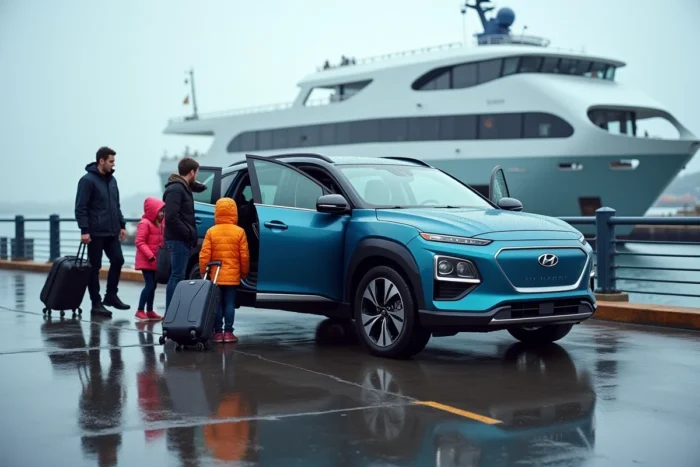
The Ioniq 7 shares the E-GMP platform with the Kia EV9 and offers comparable interior space. Its differentiation lies in a slightly more premium positioning and distinct design.
For large families hesitating between the two, the choice comes down to the local after-sales network and battery warranty conditions. Both models offer genuinely usable third-row habitability, placing them in a category of their own.
7. Skoda Enyaq Coupé iV – the volume-price compromise
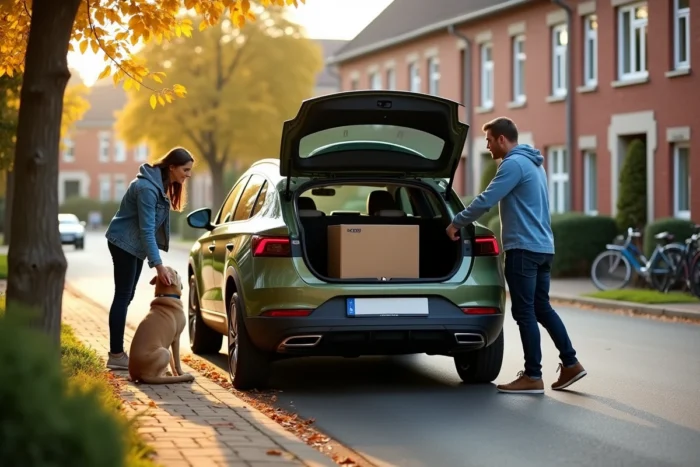
The Enyaq utilizes the MEB platform from the Volkswagen group with a price positioning more accessible than the ID.4. Its trunk is among the most generous in the compact electric SUV segment.
Families with two young children and a controlled budget will find here a volume-to-price ratio among the best on the market. The Coupé version sacrifices a few liters of trunk space for better aerodynamics, thus reducing highway consumption.
8. BMW iX1 – the premium compact for urban families
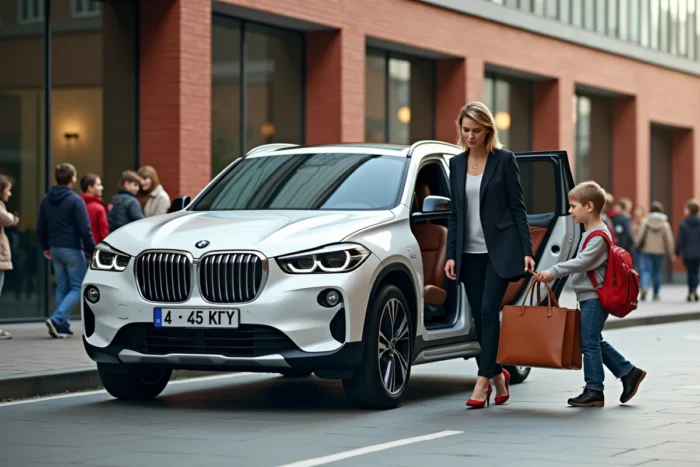
The iX1 targets urban families with two children who do not want to give up on premium. Its compact size makes parking in the city easier, an often underestimated criterion in traditional comparisons.
The range is sufficient for daily trips and nearby weekends. For long-distance vacations, planning charging stops requires more anticipation than with a Model Y or an ID.7 Tourer.
9. MG5 – the entry-level electric estate
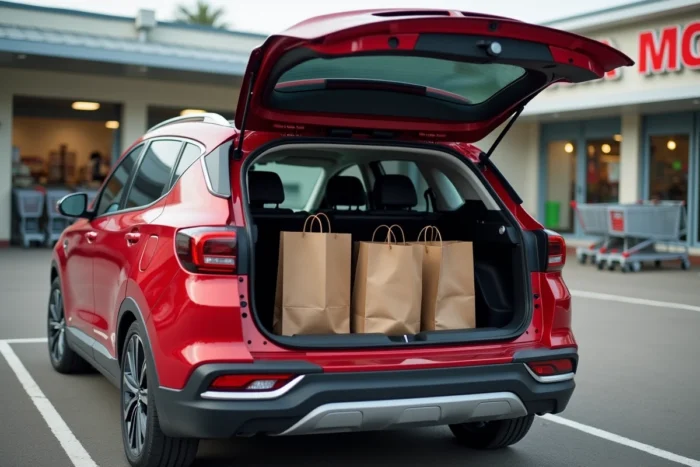
The MG5 is the only accessible electric estate on the market. Its price after subsidies places it in a range that few competitors reach, making it the logical choice for budget-conscious families.
- Generous trunk volume for the segment, sufficient for a vacation for a family of four
- AC charging suitable for standard home wallboxes
- Finishes and active safety equipment lag behind European models
Families who charge exclusively at home and primarily drive in suburban areas will get the most out of this model.
10. Kia Niro EV – the compact crossover for small families
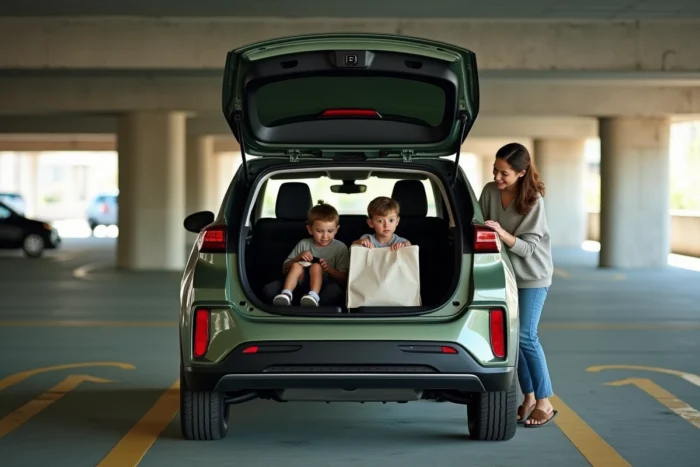
The Niro EV closes this ranking not for lack of quality, but because its size is intended for families with one child or two young children. Beyond that, the rear space becomes limiting.
Its contained consumption and proven reliability make it a family vehicle transitioning to electric. Families in apartments without charging stations will appreciate its low consumption, which spaces out public charging visits.
The choice of an electric family car depends less on the figures on the technical sheet than on the family’s profile itself. A family with three children has only two credible options for real seven-seaters (EV9, Ioniq 7). A family of four in a house with a wallbox can consider almost the entire ranking. Families in apartments without charging stations must prioritize real range and fast charging speed to limit daily logistical constraints.