
An unknown number appears on your screen, the call ends before you can pick up. Identifying this phone number takes just a few seconds with an online reverse directory. The principle is simple: you enter the number, the service queries its database, and returns a name, location, or spam report.
However, this quick result deserves to be understood before being taken at face value. Not all answers are equal, and certain technical limitations can radically change the reliability of the information obtained.
Why a reverse directory may not find all numbers
Even before typing a number into a reverse search engine, it’s important to understand what feeds (or does not feed) these databases. Inclusion in a directory depends on the subscriber’s consent. In France, an operator cannot list the contact details of a fixed or mobile subscriber in searchable lists without their prior consent.
In practical terms, if a person has never authorized the publication of their information, no reverse directory will return their name. Therefore, the absence of a result does not mean that the number is fraudulent.
There is also a specific opt-out, sometimes called an “anti-reverse directory list.” It ensures that the name or address cannot be found from the number. This option must be requested directly from the operator. When you use a free reverse directory with immediate response, keep in mind that the result entirely depends on these permissions.
In summary, a search that yields no results is often normal. This is the operation intended by the regulations, not a malfunction of the service.

Phone spoofing: when the displayed number does not belong to the caller
Have you ever received a call from a local number, answered, and discovered a sales pitch unrelated to your city? That’s spoofing. The fraudster alters the number presented to the recipient to inspire trust or bypass anti-spam filters.
The displayed number may belong to an innocent third party. The person whose number is spoofed has not been hacked and may not even know the caller. If you search for this number in a reverse directory, you risk identifying a collateral victim, not the scammer.
What call authentication changes (and does not change)
As of October 1, 2024, for landlines and January 2025 for mobiles, operators must authenticate certain calling numbers. This mechanism reduces spoofing on national calls properly processed by the technical chain.
However, poorly authenticated calls or those from abroad remain vulnerable. Spoofing has not disappeared. Therefore, a reverse directory result may attribute a number to the wrong person.
The best practice: if an unknown number seems suspicious, cross-check the information. A reverse directory provides a first lead, not proof of identity. Verify through a second channel before calling back or sharing personal information.
Free reverse search: distinguishing reliable services from noise
Typing a phone number directly into Google is the quickest method. The search engine aggregates results from forums, directories, and community reports. You sometimes get a name, often reviews from other users about the nature of the call (spam, sales pitch, scam).
Dedicated reverse directories like Pages Jaunes or 118 218 work differently. They query databases built from operator data, with the consent limitations described above. Their coverage is better for landlines than for mobiles.
Here’s what distinguishes a useful service from a dubious one:
- No payment required before displaying a first result. Reliable services at least show whether the number is landline, mobile, or reported as unwanted before any registration.
- The presence of recent community reports: have other users identified this number as a sales pitch or spam? An active service displays dated reviews.
- The absence of redirects to premium-rate numbers or forms asking for your own details in exchange for the result. If the site requires your number to “verify” the one you are searching for, leave the page.
Identifying a mobile number: apps and limitations
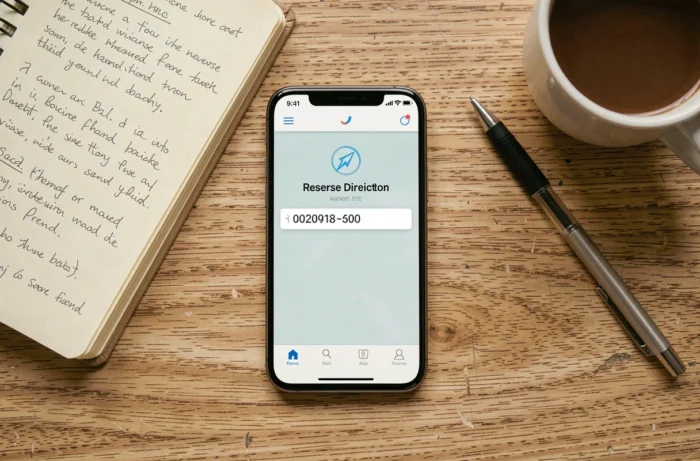
Several mobile applications offer a real-time incoming call identification service. The principle: the app compares the incoming number to its own database, fed by user reports.
The larger the user community, the more up-to-date the reports of unwanted numbers are. It’s the same mechanism as online reviews: reliability depends on the volume and freshness of contributions.
What these apps collect in return
Most of these free services operate on an implicit exchange. You access the database, and in return, the app accesses your contact directory. This data feeds the service for other users.
Before installing a reverse directory app, check the requested permissions. An app that requires access to your SMS, location, or call history goes beyond what is necessary for simple number identification.
Telemarketing and suspicious numbers: what to do after the search
Identifying a number as a source of telemarketing does not always stop the calls. French regulations now require prior consent from the consumer before any telemarketing. Despite this ban, calls persist.
After identifying an unwanted number, two concrete actions:
- Block the number directly from your phone (landline or mobile). Each operating system offers this function in the call settings.
- Report the number on a community platform or to your operator. Collective reports allow anti-spam filters to update their lists and protect other users.
- If you suspect number spoofing, do not call back. A callback confirms that your line is active and may generate more calls.
A reverse directory remains a first-line tool. It guides, it does not decide. Cross-checking the result with a community report and common sense remains the safest method to determine whether a number deserves to be called back or blocked.