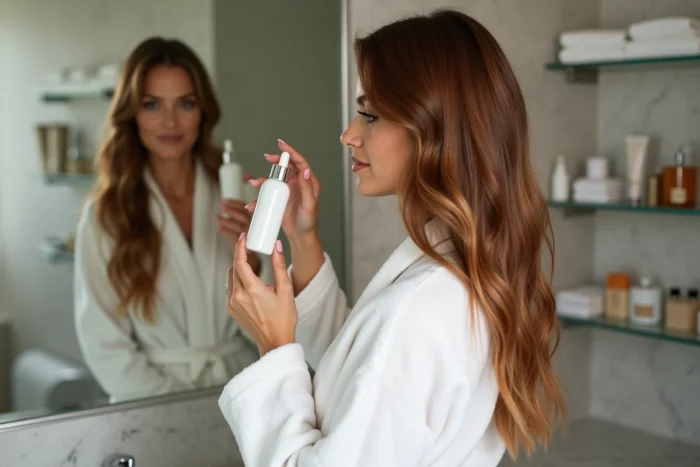
Vermogal is a hair gel whose active substance, bioallethrin, belongs to the family of synthetic pyrethroids. This product, originally formulated as a pesticide to eliminate lice, is also used by some people in the hope of stimulating hair growth or revitalizing the scalp. Its effectiveness largely depends on the application method, frequency of use, and precautions taken.
Bioallethrin and the scalp: what the active ingredient actually does
Bioallethrin acts on the nervous system of parasites. Its primary role is to neutralize lice and their nits through direct contact. This molecule was not designed as a hair growth agent.
The “regrowth” effect reported by some users can probably be explained by an indirect mechanism: by sanitizing the scalp (eliminating parasites, reducing itching), Vermogal may create a more favorable environment for the normal hair cycle. Sanitizing the scalp does not mean stimulating the hair follicle, and this distinction remains central to adjusting expectations.
A comprehensive guide on the use of Vermogal for hair helps to better frame the actions and realistic results to expect.

Dosage and dilution of Vermogal: the technique that changes everything
Vermogal comes in the form of a concentrated gel. Applying it pure to the scalp is a common mistake that can cause irritation or even mild burns on sensitive skin.
Preparing the mixture
The most reliable method is to place a small amount of gel in a small bowl and then dilute it with a bit of warm water until a fluid consistency is achieved. Some users then transfer the mixture into a henna syringe to target the roots section by section. This technique allows for even distribution and avoids wasting product on lengths, where it has no useful effect.
Amount and application area
- Apply only to the roots and the scalp, never on the lengths or ends, which do not need a pesticide treatment and risk drying out.
- A small amount of gel per application is sufficient for the entire scalp, provided the product is well diluted.
- Gently massage with fingertips after application to help it penetrate, without rubbing aggressively, which could irritate the skin or weaken the hair at the root.
Frequency and application time of Vermogal on hair
The question of application time is divisive. Some people leave the product on overnight under a cap, while others rinse it off after two hours. No accessible clinical study definitively determines the ideal duration.
What emerges from shared experiences online is that one application per week with a minimum exposure time of two hours is a reasonable starting rhythm. Leaving it on overnight is an option adopted by some users, but this approach increases the risk of irritation, especially on an already sensitive or damaged scalp.
Daily use in small amounts without rinsing, sometimes mentioned in forums, is not advisable without dermatological advice. A product containing a pyrethroid insecticide is not a harmless leave-in treatment.

Often overlooked precautions with Vermogal
Vermogal is not a conventional cosmetic treatment. Its composition imposes precautions that online tutorials often omit.
- Protect the eyes during application: bioallethrin is irritating to the ocular mucous membranes. Rinse thoroughly with clear water in case of contact.
- Do not apply to a scalp with wounds, scabs, or scratching lesions. Irritation would be aggravated.
- Avoid combining Vermogal with other chemical hair treatments (dyes, relaxers) in the same week. Spacing out applications reduces the risk of skin reactions.
- Keep the product out of reach of children and do not use it on infants without medical prescription.
In France, regulations on lice products containing insecticides have tightened in recent years. Formulations based on malathion or pyrethrins have gradually disappeared from pharmacies in favor of mechanical products based on dimethicone. Check the availability and regulatory status of Vermogal in your country or pharmacy is a prerequisite for any purchase.
Vermogal and hair care routine: how to integrate it without damaging the hair
A treatment with Vermogal does not replace a moisturizing care routine. After each rinsed application, it is advisable to apply a conditioner or nourishing mask on the lengths to compensate for the potential drying effect of the product.
On the day of application, avoid using a high-temperature hairdryer on the treated scalp. Direct heat combined with product residues can exacerbate irritation.
Spacing Vermogal by at least three days from any scrubbing or exfoliation of the scalp helps to avoid altering the skin barrier. The scalp needs time to rebalance between two active treatments.
Visible results on density or growth take time. The growth cycle of a hair spans several months, and no topical product can radically accelerate this biology. A sanitized scalp, reduced itching, and less abundant shedding during brushing are the first concrete signs to observe, well before a noticeable gain in length.