What concrete differences separate the various approaches to modern home decor in 2026? Between the return of warm neutrals, the rise of warm minimalism, and the gradual abandonment of all-white, the choices of palette, materials, and furniture yield very different visual results and budgets. This article measures these differences to help you decide.
Warm neutral palettes vs. cool white: what Cloud Dancer changes
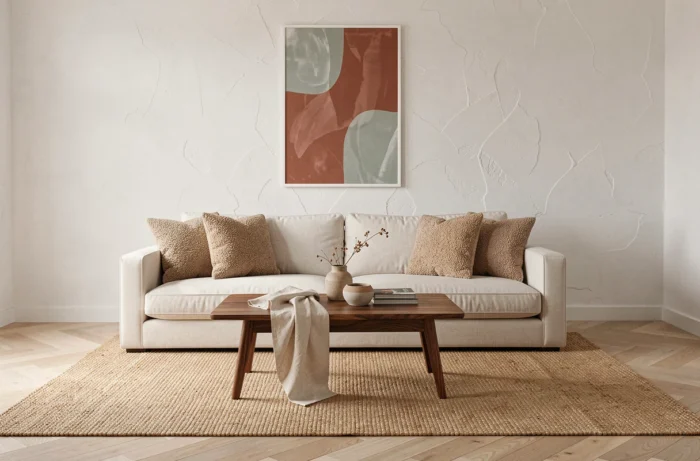
The clinical white that has dominated interiors since the early 2010s is giving way. Several trend analyses for 2026 converge on one point: palettes are refocusing around warm neutrals like beige, sand, and greige, with the Pantone reference Cloud Dancer (11-4201) as a recurring base.
The difference is not limited to hue. A pure white wall reflects light uniformly, which accentuates contrasts with dark furniture. A warm ivory, on the other hand, slightly absorbs light and softens transitions between surfaces.
To structure a modern palette around these neutrals, designers combine Cloud Dancer with deeper accents (burgundy, olive green, navy blue) and textured materials: brown wood, natural stone, matte metal. The result is a bright interior that avoids a sterile effect, a balance that cool white alone cannot achieve.
Specialized resources allow you to visualize these combinations before diving in, notably https://www.ma-deco-maison.com/, which gathers selections of interior decor suited to these current palettes.
| Criterion | Cool white (2010-2020 type) | Warm neutrals (2026 trend) |
|---|---|---|
| Perceived brightness | Strong, direct reflection | Soft, diffuse reflection |
| Wood furniture compatibility | Marked contrast | Fluid transition |
| Recommended accents | Black, gray, chrome | Burgundy, olive green, navy blue |
| Associated materials | Glossy, glass, steel | Stone, brown wood, matte metal |
| Main risk | Clinical effect | Monotony if no strong accent |
Warm minimalism and Japandi: two variations of elegant modern style
Cold minimalism, with its clean lines and smooth, texture-less surfaces, has not disappeared. However, it no longer holds the dominant position it had a few years ago. Two approaches are gradually replacing it in modern interiors.
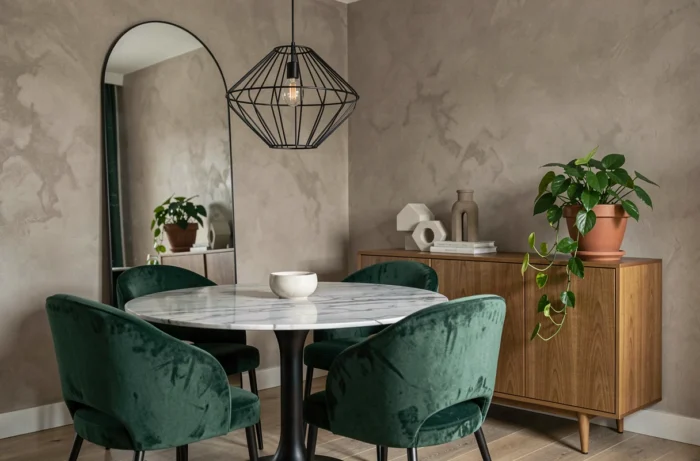
Japandi merges Scandinavian aesthetics and Japanese design. The lines remain simple, but the materials introduce warmth: untreated light wood, linen, handcrafted ceramics. Imperfection is embraced, in line with Wabi-sabi, giving the pieces a character that classic minimalism struggled to produce.
Warm minimalism, on the other hand, maintains the reduction of objects but replaces cold surfaces with natural textures. A straight-lined sofa will be covered in boucle fabric rather than smooth leather. Shelves will hold a few pieces in stoneware or turned wood instead of remaining empty.
What concretely distinguishes these two approaches
- Japandi favors soft contrasts between light wood and dark tones (black, dark brown), with low furniture inspired by Japanese design
- Warm minimalism keeps a more uniform palette (tone on tone) and focuses on layering textures: wool, thick cotton, rattan
- Both styles reject glossy furniture and finishes, which clearly distinguishes them from the minimalism of the 2015 era
In a living room, the choice between these two directions significantly alters the atmosphere. Japandi creates a contemplative, almost silent ambiance. Warm minimalism produces a more enveloping space, closer to a cocoon.
Materials and furniture lines: where the difference lies in modern decor
Curved design furniture is making a comeback in modern interiors, but not just any way. The 2026 trend favors soft curves on structural pieces (armchair, coffee table, mirror) rather than organic shapes on every element in the room.
Wood remains the central material of an elegant modern interior. In contrast to the bleached oak that dominated Scandinavian catalogs, darker woods (walnut, smoked oak) and matte finishes are gaining visibility. Combined with matte metal (brushed brass, black steel), they anchor the furniture in a sophisticated register without resorting to gloss.
Lighting and decorative objects: the accents that matter
In modern home decor, artificial light plays a role as structuring as the color palette. Sculptural pendants made from natural materials (paper, fiber, wood) replace recessed lights as the focal point of a room. They add visual volume without cluttering the floor space.
Decorative objects follow the same logic of reduction. Rather than multiplying accessories, modern interiors focus attention on a few impactful pieces: a large stoneware vase, a generously proportioned mirror, an abstract sculpture. Three well-chosen objects replace ten scattered knick-knacks.
Modern living room decor: the choices that structure the space
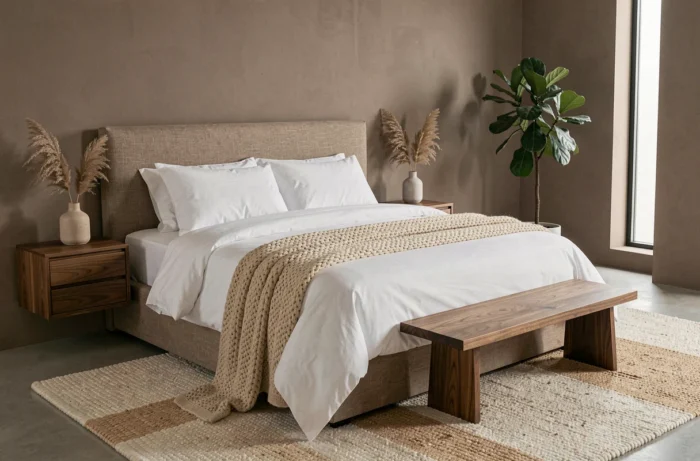
The living room concentrates the majority of decisions regarding modern style. It is the room where the coherence between colors, furniture, and lighting is perceived most quickly.
The first choice concerns the floor. A wide-plank hardwood floor with a natural hue (neither too light nor too dark) provides the most versatile base for a modern living room. It pairs well with both a thick wool rug and a bare floor, depending on the season or mood.
The second choice focuses on the sofa, which remains the centerpiece. Models with deep seating and low backs dominate current collections. Their horizontal silhouette visually enlarges the space, an asset in medium-sized rooms.
- A textured fabric sofa (boucle, corduroy) in a warm neutral tone integrates better than a black leather model in a contemporary palette
- A round or oval coffee table softens lines and facilitates circulation, especially in living rooms open to the kitchen
- A pendant light above the coffee table creates a vertical focal point that balances the horizontal nature of the sofa
Modern home decor does not rely on a single style applied mechanically. The most accomplished interiors in 2026 combine elements from Japandi, warm minimalism, and warm neutral palettes, adapted to the real constraints of each room. The common denominator remains coherence between materials, reduction of excess, and thoughtfully crafted light at every level of the space.