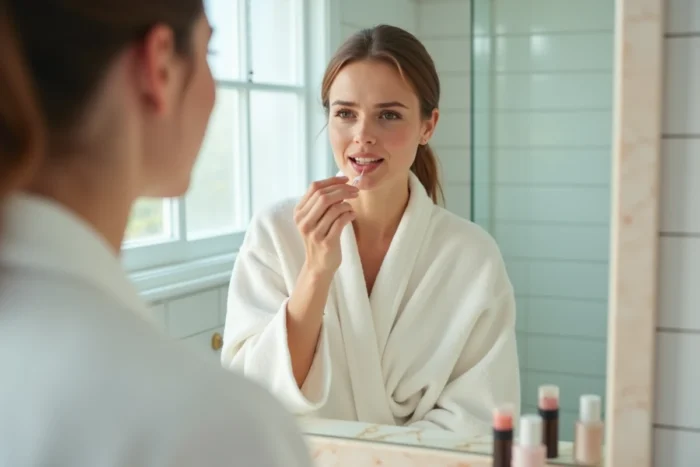
A gloss that tingles upon application is not a manufacturing defect. The sensation comes from a specific pharmacological mechanism: local vasodilation triggered by calibrated irritating active ingredients. Understanding which ingredients cause this tingling allows one to distinguish an expected cosmetic effect from an abnormal skin reaction.
Local Vasodilation Mechanism and Lip Irritation Threshold
The lip mucosa lacks a thick stratum corneum. Its skin barrier, significantly thinner than that of the rest of the face, allows topical actives to penetrate more effectively. A plumping gloss takes advantage of this permeability by depositing vasodilating agents directly onto an almost mucosal area.
Capsicum (pepper extract), menthol, and niacin (vitamin B3) stimulate TRPV1 or TRPM8 receptors depending on the molecule. The activation of these thermosensitive receptors triggers a local blood flow. The lips redden, swell slightly, and the wearer feels a tingling or transient warmth.
We observe that the intensity of the tingling depends on the dosage and not just the molecule. A gloss containing a low concentration of capsicum may tingle less than a product overdosed with menthol. The formulation plays a crucial role: an occlusive excipient (wax, polybutene) slows penetration and reduces the sensation, while an aqueous base accelerates it.
If you are looking to understand why a gloss tingles the lips, the answer lies as much in the permeability of your own mucosa as in the product’s INCI list.
Fragrance Allergens in Glosses: What the European Regulation 2023/1545 Changes
Tingling does not always indicate a deliberate plumping effect. Some burning sensations signal an allergic reaction to a component masked under the generic term “fragrance.”
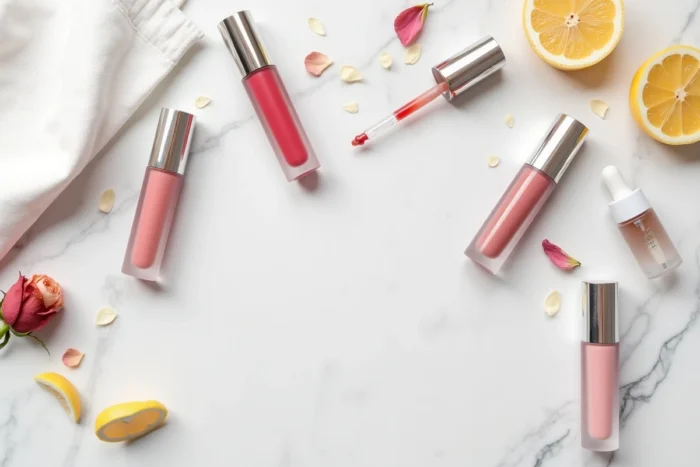
The regulation (EU) 2023/1545 now mandates the mandatory declaration of 82 fragrance allergens on cosmetic labels, up from 24 previously. For leave-on products (gloss, balms, lipsticks), the declaration threshold is set at 0.001%. Starting July 31, 2026, any new non-compliant gloss will be banned from the market. Remaining stocks must be withdrawn by July 31, 2028.
Specifically, mentholated, fruity glosses, or those formulated with essential oils will need to separately list allergens like limonene, linalool, or citronellol. For consumers prone to lip irritation, this increased transparency finally allows for linking abnormal tingling to an identified allergen on the packaging.
Formaldehyde Releasers in Preservatives
Another point of caution: some preservatives found in glosses are formaldehyde releasers (DMDM Hydantoin, Imidazolidinyl Urea, Diazolidinyl Urea). Starting July 2026, the label of affected products must state “releases formaldehyde.” A gloss that persistently tingles deserves an examination of its INCI list, not just a brand switch.
Capsicum, Menthol, Hyaluronic Acid: Comparative Irritation Profile
Not all plumping actives produce the same type of sensation. We recommend distinguishing three profiles:
- Capsicum (capsaicin or oleoresin capsicum) causes localized burning heat. The effect is dose-dependent and can last several minutes. It is the active most likely to exceed the tolerance threshold on damaged or dehydrated mucosa.
- Menthol and its derivatives (menthyl lactate, menthoxypropanediol) activate cold receptors. The sensation is a cool tingling, generally better tolerated. The main risk is drying: menthol can exacerbate lip dryness with repeated use.
- Low molecular weight hyaluronic acid, often presented as a pure moisturizing active, may cause slight tingling upon penetration. This phenomenon is brief and does not accompany visible redness or swelling.
A gloss that combines capsicum and menthol in the same formula adds two distinct irritation pathways. The result is often an intense tingling that some sensitive skin types cannot tolerate.
Differentiating Normal Plumping Effect from Allergic Reaction on the Lips
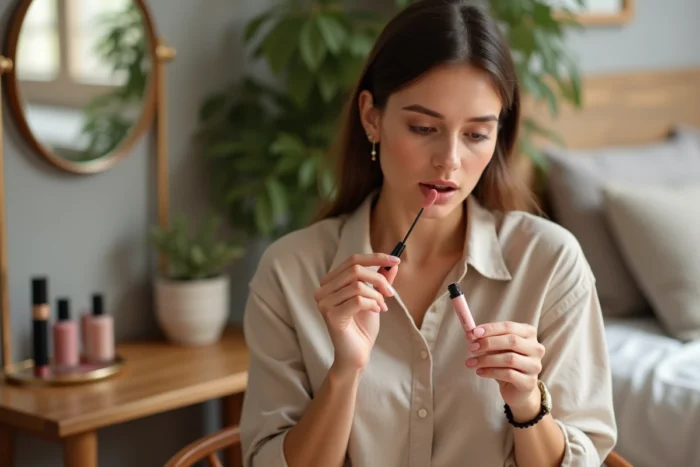
The tingling from a well-formulated plumping gloss lasts between a few seconds and two minutes. It gradually fades and gives way to a moderate feeling of volume. Any sensation that persists beyond five minutes or intensifies is suspect.
Warning signs to watch for:
- Asymmetrical or disproportionate swelling compared to the product’s usual effect
- Appearance of blisters, cracks, or peeling in the hours following application
- Burning sensation extending beyond the vermilion (lip contour, perioral skin)
- Systematic recurrence with the same product, even after a break of several days
In these cases, immediate removal of the product and rinsing with lukewarm water is the first reflex. A repairing balm without irritating fragrance or preservatives (like ceramides or pure shea butter) helps restore the lip barrier. If symptoms persist, a dermatological patch test can identify the allergen involved.
Plumping Gloss and Lip Care: Limiting Discomfort Without Giving Up Volume
Applying a moisturizing balm about ten minutes before the plumping gloss creates a protective layer that slows the penetration of irritating actives. The tingling sensation is reduced without compromising the volumizing effect.
We recommend favoring formulas that combine a single vasodilating agent with soothing actives (bisabolol, allantoin, panthenol). A good plumping gloss should never contain more than two irritants in its INCI list.
Checking the expiration date is a often overlooked reflex. An expired gloss may see its preservatives degrade, releasing irritating by-products not present in the original formula. The PAO (period after opening) of a gloss typically ranges from six to twelve months.
The new European regulation on allergens provides a concrete lever: starting in 2026, reading a gloss label will allow for precise identification of risk substances. For reactive skin, this is likely the most useful advancement in lip care in recent years.