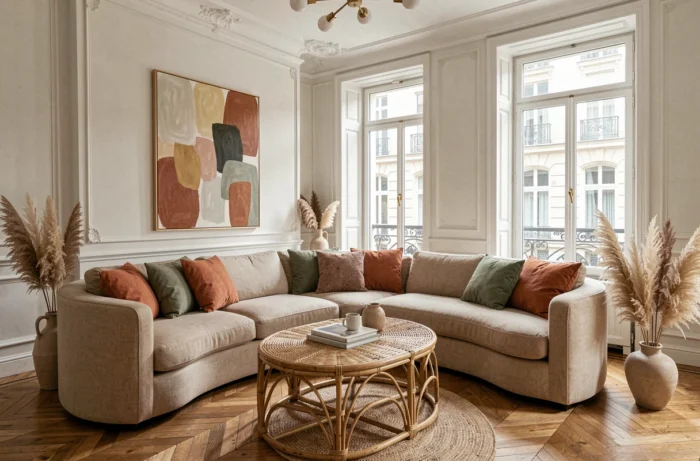
What criteria distinguish a fleeting decor trend from a lasting movement in 2024? Between color palettes, preferred materials, and new European regulatory constraints, decor trends to enhance an interior are not just about aesthetic choices. They also involve questions of air quality, material traceability, and the actual durability of furniture.
Formaldehyde Emissions and Furniture: What European Regulation Changes
The regulation on formaldehyde emissions directly affects furniture choices. Starting from August 6, 2026, any furniture and wood-derived panel sold in the European Union must comply with a formaldehyde emission limit reduced by half compared to the historical threshold of class E1.
This restriction, uniform across the 27 member states, aligns Europe with the strictest standards in the world (CARB Phase 2 in the United States, F4-Star in Japan). For those renovating or furnishing an interior in 2024, this means one concrete thing: the ranges of “low emission” certified furniture become a criterion for choice, not just a marketing argument.
Manufacturers anticipating this standard are already offering low-emission engineered wood panels and furniture. Consulting decor trends on Déco Maison helps identify brands that incorporate this health requirement into their collections.
2024 Trend Colors: Comparative Palette of Market References
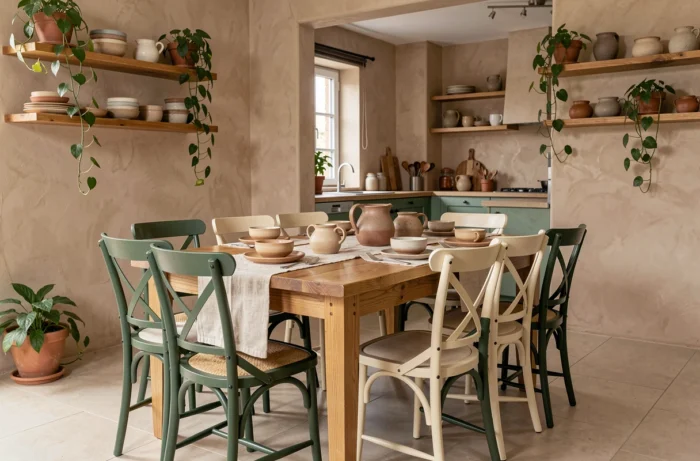
Colors are the most immediate decor lever. Several directions coexist this year, with distinct logics depending on the size of the spaces and the desired atmosphere.
| Palette Type | Key Colors | Recommended Use |
|---|---|---|
| Neutral and Light Tones | Beige, Off-White, Greige | Small Spaces, Bright Living Areas |
| Earthy and Warm Tones | Terracotta, Chocolate Brown, Peach | Large Volumes, Bedrooms, Cocooning Spaces |
| Natural Greens | Sage Green, Olive Green, Forest Green | Offices, Living Rooms, Biophilic Spaces |
| Retro Bright Colors | Sun Yellow, Bright Pink, Orange | Accent Touches, Accessories, Cushions |
Neutral tones remain a safe bet for visually enlarging a space. On the other hand, shades of green and terracotta dominate characterful interiors, driven by the biophilic trend and a return to natural materials.
Bright colors inspired by the seventies work better as accents (a cushion, a vase, a frame) than as solid colors on walls. An entirely orange interior ages quickly. A terracotta wall paired with dark wood furniture lasts several years.
Sustainable Decor Materials: Wood, Velvet, and Metal Facing New Requirements
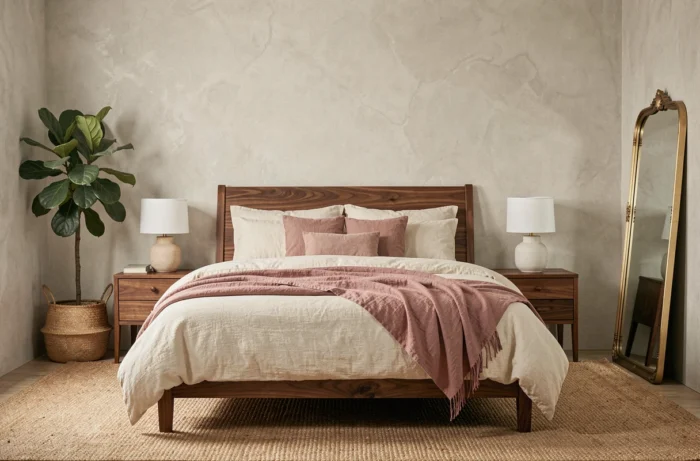
The choice of materials in 2024 reflects two parallel movements. The first is aesthetic: a return of wood in dark shades, corduroy, boucle fabric, and metal (brass, brushed steel). The second is regulatory: the new European regulation on construction products (Regulation (EU) 2024/3110) introduces requirements for digital traceability, carbon footprint, and circularity for interior design materials.
This text replaces the old regulation 305/2011. For interior decoration, this translates into increasing pressure on manufacturers to document the origin and environmental impact of their products.
- Dark wood (walnut, smoked oak) remains a solid choice, provided the panel certification and VOC emissions are checked
- Corduroy and boucle provide texture without resorting to synthetic materials, but their durability depends on the composition (favor natural or recycled fibers)
- Metal (brass, black steel) is making a strong comeback for lighting and small hardware, with one advantage: its almost total recyclability
A trendy material that cannot withstand daily use is not a good decor choice. Boucle fabric on a heavily used seat pills within months if the weight is insufficient. Low-quality particle board swells at the first exposure to moisture.
Biophilic Design and Craftsmanship: Strongly Rooted Interior Decoration Trends
Biophilic design is not just about placing three plants on a shelf. It refers to an approach that integrates raw materials (stone, rattan, solid wood), natural light, and organic shapes into the very design of the space.
This trend is accompanied by a renewed interest in local craftsmanship. Objects made in limited series, artisanal ceramics, and handwoven textiles stand out for their embraced irregularity, in contrast to standardized industrial furniture.
- Indoor plants remain a pillar of biophilic design, but the choice of species suited to the actual brightness of the room matters more than their decorative appearance
- Rattan and caning, ubiquitous for several years, are starting to saturate some interiors: pairing them with rawer materials like stone or polished concrete avoids a catalog effect
- Local craftsmanship offers natural traceability, an argument that gains weight against the new European requirements on material origin
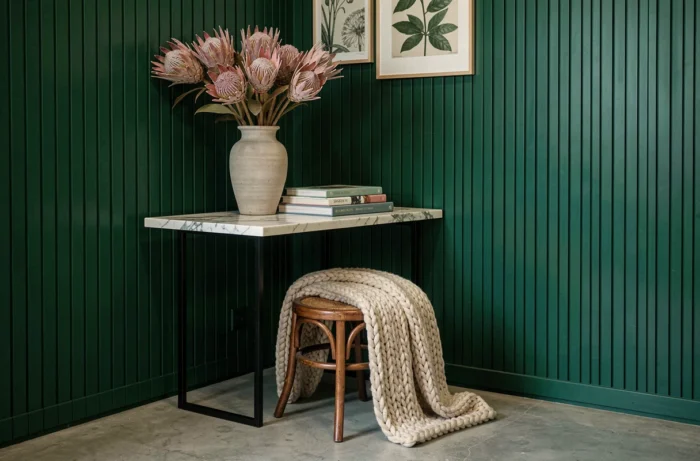
Minimalism remains present in 2024, but it evolves towards a more textured version. Completely white, stripped interiors give way to spaces where sobriety is manifested by the choice of a few strong pieces rather than emptiness. A successful minimalist interior relies on the quality of each element, not on their absence.
The decor trends of 2024 are ultimately read through a double filter: what is visually pleasing and what stands the test of time, both aesthetically and regulatory. The formaldehyde threshold set for 2026 provides a concrete horizon. Choosing materials that comply with these future requirements now extends the lifespan of furniture and avoids costly replacements in the short term.