When you open your wardrobe on a spring morning and nothing seems to work together, the problem rarely lies in the number of pieces. It comes from their coherence. Current fashion trends reward wardrobes centered around a few strong axes, rather than accumulations of clothes worn only once. Understanding these axes allows you to create outfits that hold up daily, without a huge budget.
Saturated colors and monochrome outfits: the palette shift of the season
Neutral tones have dominated wardrobes for several seasons. The trend is clearly reversing. Bright red, cobalt blue, intense olive green, and butter yellow are appearing on both runways and in streetwear. This surge of saturated colors is not limited to accessories: it can be found in key pieces like the long flowy dress or structured wide-leg pants.
The most effective reflex for adopting these colors without a fashion faux pas is the monochrome outfit in two or three similar shades. Cobalt pants paired with a sky blue top create depth effortlessly. The total red look, worn with tone-on-tone shoes, works on almost all body types as long as you choose a cut that structures the silhouette.
Neons and chrome materials also appear as a strong visual signature in 2026. They are mainly seen in accessories (bags, belts, jewelry) for those who prefer to moderate the intensity. To find fashion tips on Buzz du moment, there are regular breakdowns of color combinations by season.
Wide cuts and structured silhouettes: choose according to your body type
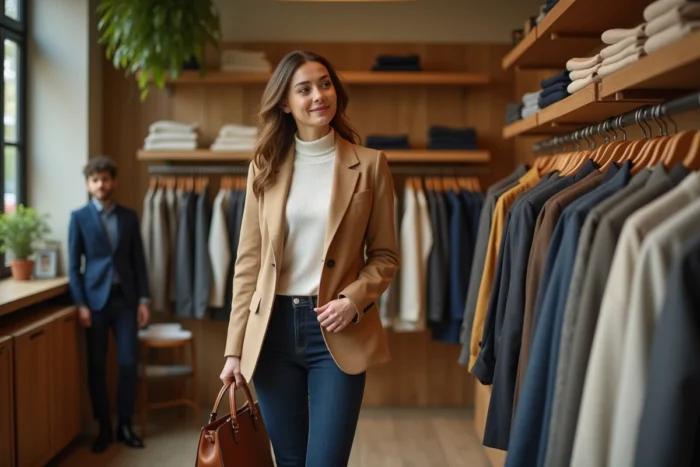
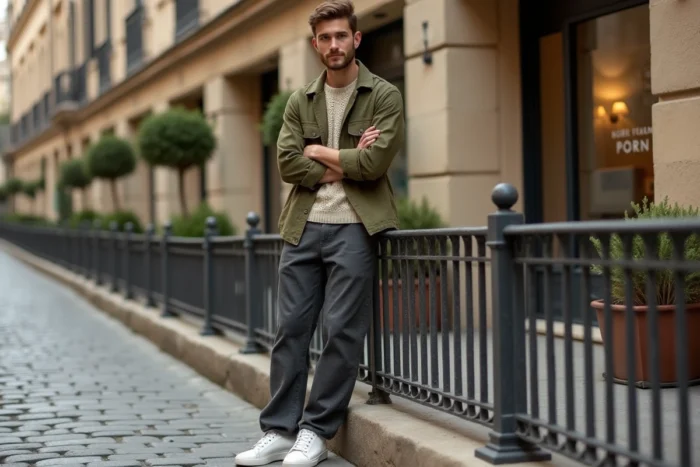
Structured wide-leg pants have become the pivotal piece of the season. Defined waist, loose fit, clean lines: they replace slim pants in most contexts, from the office to weekend outings. They are worn with a fitted top to create a contrast of volumes, not with an oversized sweater that drowns the silhouette.
The balance between a loose piece and a fitted piece remains the most reliable rule to avoid the “everything floats” effect. A voluminous patterned skirt benefits from being paired with a fitted, solid top. Conversely, slim pants (for those who prefer them) pair very well with a structured short jacket.
The case of the long flowy dress
A big winner of the spring-summer collections, the long flowy dress embodies a feminine style without rigidity. Linen or lightweight viscose versions are the most versatile. It is belted at the waist to avoid a pajama look, and bold colors (orange, pink, olive green) are chosen over overly busy prints.
The coordinated set (matching top and bottom, often in the same fabric) is a direct alternative. It gives a constructed look without thinking about combinations. Opinions vary on this point: some find the formula too “uniform,” while others appreciate saving time in the morning.
Traceable fibers and sustainable materials: a style criterion in its own right
European legislation on supply chain transparency is beginning to concretely change the available offerings in stores. More and more brands display the origin of their fibers (French linen, certified organic cotton, recycled polyester) directly on the label or product sheet. This movement is not just ethical: the quality of the fiber influences the garment’s performance after several washes.
A thick linen wide-leg pant retains its structure much longer than a synthetic fabric equivalent. A well-made viscose dress drapes better than a low-quality polyester dress, even if both look similar in photos. Checking the composition before buying avoids medium-term disappointments.
- Linen: breathable, durable, suitable for structured pieces like short jackets or wide pants. It wrinkles, but this is now accepted as an integral part of the style.
- Certified organic cotton: prioritize a sufficiently dense weight for t-shirts and shirts, otherwise the piece will quickly lose its shape.
- Recycled materials: relevant for technical clothing or accessories, less convincing for now on fluid pieces.
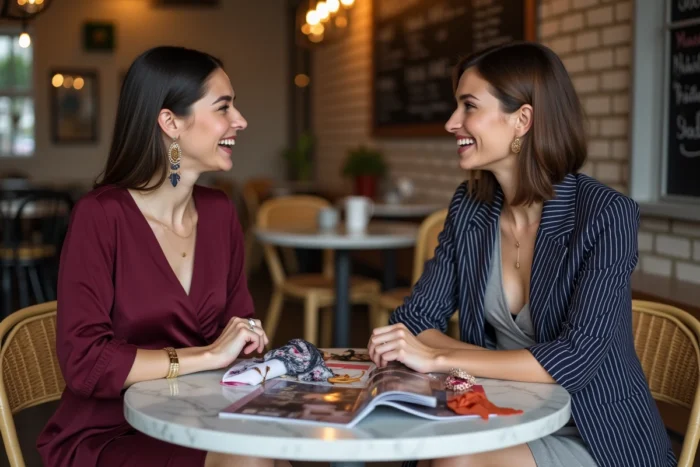
Expressive accessories and statement pieces: balance without overwhelming
Brooches, oversized jewelry, and metallic-finish bags are establishing themselves as style markers this season. The usual trap is stacking strong accessories on the same outfit. One statement accessory per look is enough to create a focal point.
An imposing brooch on a solid blazer draws the eye effortlessly. A chrome bag worn with a dark monochrome outfit adds dimension. But a brooch, an XXL necklace, and a neon bag on the same person create visual confusion.
The thin belt as a silhouette tool
It is making a strong comeback, especially to structure flowy dresses and shirts worn as dresses. It is placed at the natural waist (not on the hips). In fine leather, fabric, or discreet chain: the model matters less than the placement, which is enough to redefine the bust line.
- On a long flowy dress: thin smooth leather belt, matching or contrasting tone.
- On a coordinated set: matching fabric belt to reinforce the constructed effect.
- On an oversized blazer worn open: fine chain belt to mark the waist without closing the jacket.
Creating a coherent style in 2026 relies on three concrete choices: a color palette limited to two or three strong shades, a play of volumes that contrasts a loose piece with a fitted piece, and materials whose composition is checked before purchase. The rest, the statement accessories, trendy cuts, and chrome finishes, come to dress this base without complicating it.