
The engine oil specification for a Peugeot 2008 is not limited to a viscosity grade. Depending on the generation, the engine type, and especially the presence or absence of a wet timing belt, the required lubricant varies significantly. Here, we detail the technical points that truly guide the choice, beyond generic recommendations.
Specification FPW9.55535/03 and wet timing belt PureTech: what changes concretely
Since early 2026, Stellantis has imposed the internal specification FPW9.55535/03 as a mandatory standard for some 1.2 PureTech and 1.5 BlueHDi engines equipped with an oil-bathed timing belt. This standard replaces or complements the old PSA references B71 2290, B71 2297, and B71 2312, which most articles continue to cite indiscriminately.
The difference is not cosmetic. The chemistry of the oil approved under FPW9.55535/03 is formulated to limit the degradation of the belt’s polymer due to prolonged contact with the lubricant. An oil simply labeled 5W-30 ACEA C2, even of good quality, does not guarantee this compatibility if it does not explicitly display the Stellantis standard.
Among the approved products, Total Quartz Ineo RCP 5W-30 is a reference. Other equivalents exist, but we recommend systematically checking for the mention FPW9.55535/03 on the bottle or technical sheet, rather than relying solely on the SAE grade.
To delve deeper into the question of which engine oil for Peugeot 2008 depending on each engine type, the intersection between manufacturer standard and type of distribution remains the determining criterion.
Risk of belt degradation on PureTech 2014-2023: the role of oil
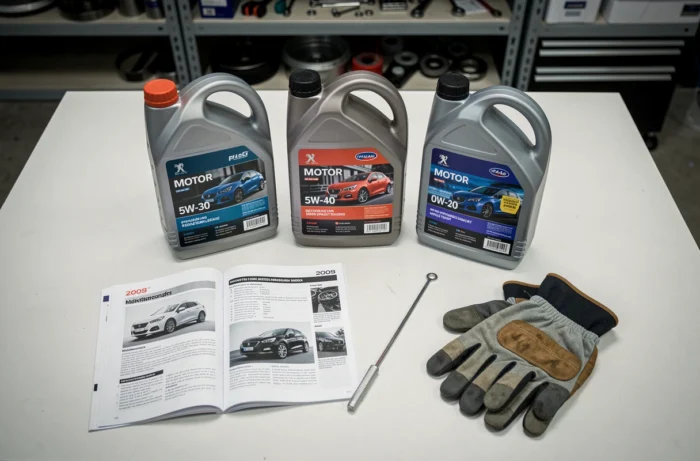
The 1.2 PureTech engines produced between 2014 and 2023 with an oil-bathed timing belt present a documented risk of premature belt degradation. Field expertise reports point to several combined factors: dilution of the oil by fuel, excessively long oil change intervals, and especially the use of oil not compliant with the manufacturer standard.
The mechanism is simple. The belt absorbs the chemical compounds from the lubricant. If the formulation is not suitable, the rubber swells, cracks, and eventually fails. On an interference engine, a belt break leads to the destruction of the valves.
Two precautions reduce this risk:
- Strictly adhere to the FPW9.55535/03 specification (or B71 2312 depending on the model year) and never substitute a generic ACEA C2 oil without verification.
- Shorten the oil change interval if the vehicle mainly makes short trips in urban environments, which promote lubricant dilution by unburned fuel.
- Check the oil level every month, as excessive consumption may indicate the beginning of internal degradation.
BlueHDi engines and diesel viscosity grades: do not confuse ACEA C2 and C3
On Peugeot 2008 models equipped with the 1.5 BlueHDi, the ACEA C2 standard remains the manufacturer reference. An ACEA C3 oil is not an acceptable substitute, even if it shares the same 5W-30 grade. The sulfate ash content (SAPS) of a C3 is higher, which can clog the particulate filter and increase the frequency of forced regenerations.
The older 1.6 HDi blocks mounted on the first generation of 2008 tolerate a B71 2290 oil in 0W-30, a more fluid grade designed to reduce cold friction. We observe that some owners switch to 5W-30 for convenience. This is not prohibitive in a temperate climate, but the manufacturer calibrated the engine mapping with 0W-30 in mind.
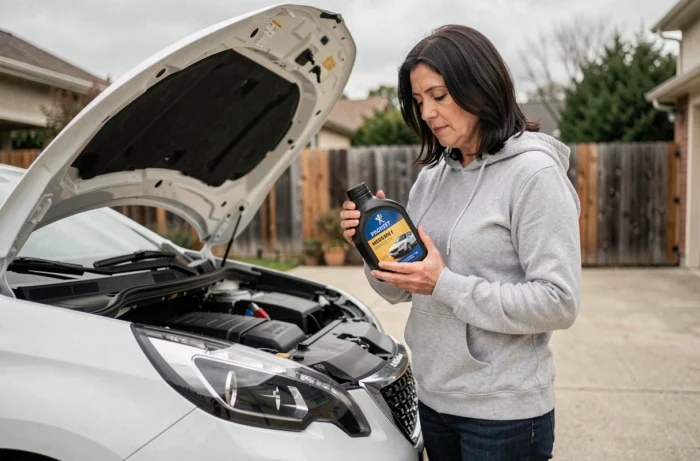
Peugeot 2008 gasoline without wet timing belt: 1.6 VTi and older atmospheric PureTech
Not all gasoline engines in the 2008 range are affected by the issue of the oil-bathed timing belt. The 1.6 VTi 120 hp uses chain distribution, and the early 1.2 PureTech 82 hp atmospheric engines (without turbo) are equipped with a conventional dry belt.
For these engines, an oil 0W-30 or 5W-30 compliant with B71 2290 is suitable. The main constraint concerns the ACEA C2 standard and the low ash content, not the polymer compatibility of the belt.
The choice between 0W-30 and 5W-30 depends on the climate and usage:
- The 0W-30 offers better fluidity at cold start, relevant in winter or in mountainous areas.
- The 5W-30 maintains a slightly thicker lubricating film at high temperatures, suitable for sustained driving or a high-mileage engine.
- On a turbo PureTech with a wet belt, neither is sufficient without compliance with FPW9.55535/03.
Reading the label and common pitfalls at the time of purchase
The SAE grade (5W-30, 0W-30) indicates viscosity. The ACEA standard (C2, C3, C5) qualifies performance. The manufacturer specification (B71 2290, B71 2312, FPW9.55535/03) guarantees compatibility with the engine. These three pieces of information appear on the label, but rarely in the same place.
We recommend reading the product technical sheet rather than just the marketing label. Some brands display “compatible with PSA” without holding the actual approval. Only the exact mention of the manufacturer standard on the product sheet constitutes a guarantee.
The most frequent confusion concerns oils labeled ACEA C2 sold as universal for the entire Stellantis group. Since the introduction of the FPW9.55535/03 specification, this approach is no longer valid for engines with a wet timing belt. Checking the engine production date and its type of distribution remains a prerequisite for any lubricant purchase.