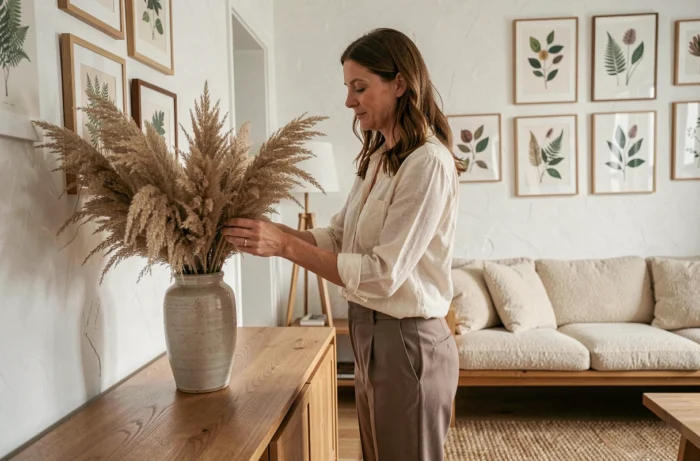
Interior decoration refers to the overall choices of colors, materials, furniture, and lighting that define the atmosphere of a living space. Transforming one’s interior is not just about following a trend: it is about adapting each room to its use, technical constraints, and personal sensitivity. Understanding a few fundamental mechanisms helps avoid costly mistakes and achieve a coherent result.
Tactile materials and earthy palette: what environmental psychology changes for decor
Since 2023-2024, research in environmental psychology has documented a direct link between certain decorative choices and the reduction of perceived stress. Interiors that combine warm and natural colors, tactile materials (raw wood, linen, textured finishes), and adjustable lighting are associated with lower anxiety and cognitive fatigue.
This finding goes beyond the simple realm of “cocooning.” Researchers specifically link an earthy palette, the presence of plants, and the arrangement of visual retreat areas to measurable indicators of mental health. For the decoration of a living room or bedroom, this means that a wall in clay tones combined with a thick textile produces a tangible effect on well-being, far beyond aesthetics.
In practical terms, prioritizing wood, natural stone, or fabrics with visible grain on contact surfaces (seating, headboard, countertop) is a more effective lever than merely changing the wall color. The material that the hand touches is as important as what the eye perceives. Those who wish to discover decor with Mon Blog Déco will find many examples of this approach applied room by room.
Consistency of patterns and colors in the same space
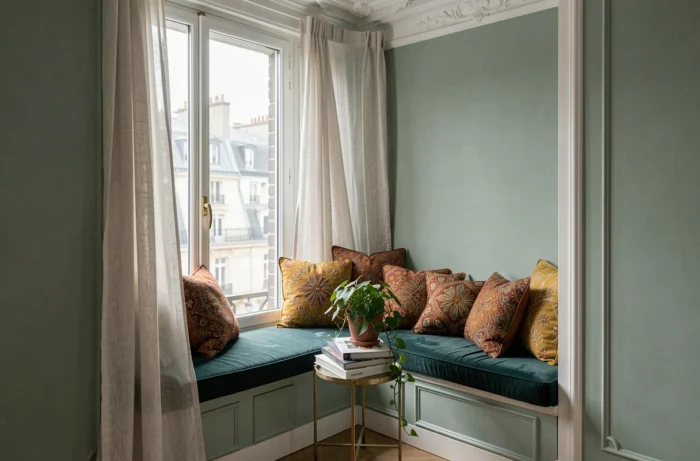
The most common mistake in an interior decoration project is to accumulate individually appealing elements that are incompatible with each other. A geometric patterned cushion, a kilim rug, and a floral wallpaper can each be remarkable. Together in the same living room, they create a visual overload that is tiring.
Limiting patterns to two families per room is a simple rule that works in most cases. For example, an organic pattern (foliage, curves) coexists well with a structured pattern (stripes, checks). Adding a third decorative register requires a more advanced mastery of proportions.
Building a palette from the floor
The floor represents the largest colored surface in a room, often overlooked when choosing shades. A light oak floor leans towards yellow, while a ceramic tile floor leans towards gray. The entire wall and textile palette should stem from this dominant color rather than a color chart seen on a screen.
- Identify the temperature of the floor (warm or cold) before choosing wall paint, to avoid unintentional contrasts between a honey-colored floor and a bluish gray.
- Incorporate the floor’s shade into at least one textile element (curtain, throw, cushion) to create visual continuity between horizontal and vertical surfaces.
- Reserve saturated colors for small objects or a single wall: a rust-colored armchair, a teal vase, not both at once against a white background.
Decoration of the living room and kitchen: two different logics
The living room and kitchen are the two rooms that decor research targets the most. Their transformation relies on distinct constraints that a global project must take into account.
In a living room, the sofa structures the entire space. Its position determines circulation paths, orientation towards natural light, and the placement of secondary furniture. Moving a sofa by a few dozen centimeters can radically change the perception of volume, without purchasing anything.
In the kitchen, the constraint is primarily functional. The activity triangle (water point, cooking area, cold storage) dictates ergonomics. Decoration comes into play afterward, on the free surfaces: backsplash, open shelves, lighting above the island or table. Changing the backsplash, for example to zellige tiles or tinted resin, visually transforms the entire kitchen for a limited budget.
The case of open living-kitchen spaces
When the living room and kitchen communicate, visually delineating the areas without partitioning becomes the main challenge. A change of flooring (tiles in the kitchen, hardwood in the living room), a generous rug, or a low-hanging light above the countertop is often enough to mark the transition.
Be careful not to multiply styles between the two areas. An open space benefits from sharing a common palette, even if varying finishes: light wood everywhere, but matte in the living room and glossy in the kitchen for maintenance reasons.
Decorative renovation and energy constraints in France
Interior transformation projects have faced stricter regulatory frameworks regarding energy renovation and heating since 2024-2025. Classic decor content often overlooks this dimension, while it conditions concrete choices.
Replacing a visible cast iron radiator with a recessed model changes the design of an entire wall but requires compliance with new performance standards. Applying a thick decorative finish on a poorly insulated wall can hide a thermal bridge without addressing it. Every aesthetic choice must be checked from a thermal perspective before execution, otherwise, the visual result may come with a degradation of comfort or increased heating costs.
Before launching a decoration project that affects walls, floors, or openings, checking the energy performance diagnosis of the dwelling helps avoid repeating the same work twice. A lime finish on a well-insulated wall combines thermal performance and decorative texture. On a bare wall, the same finish will solve nothing.
The choice of a material, color, or piece of furniture remains the most personal gesture of a decoration project. However, this gesture benefits from being based on the logic of the room, the nature of the floor, the quality of insulation, and the available light, rather than solely on visual inspiration.