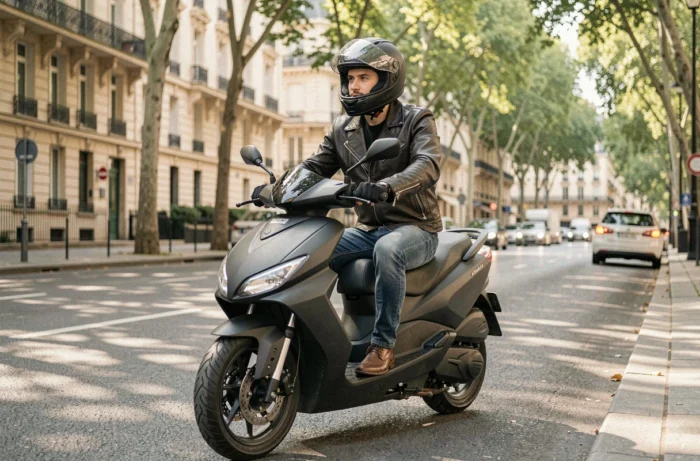
A 125 scooter advertised by its manufacturer to reach 120 km/h actually runs between 110 and 115 km/h GPS. This discrepancy, far from being trivial, changes the game on fast roads, when riding two-up or against the wind. Here, we detail the technical mechanisms that separate the displayed speed from the actual speed, and what this concretely implies for the rider.
Speedometer Bias and GPS Measurement on a 125 Scooter
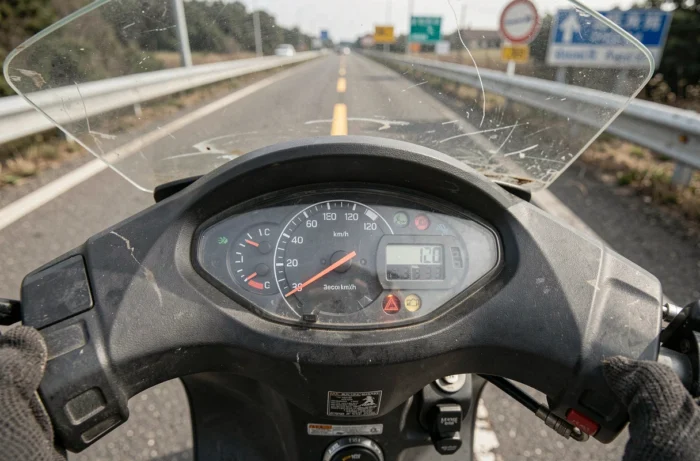
European regulations allow manufacturers to display a speed higher than the actual speed, but never lower. This bias, calibrated at the factory, explains why a speedometer may indicate 125 km/h while the GPS reads 115 km/h.
On recent models (KTM Duke 125 2026, Yamaha MT-125), GPS tests show a typical gap of 5 to 10 km/h between the speedometer and the actual speed. A Keeway RKF 125, advertised at around 120 km/h on the speedometer, drops to 109 km/h on GPS. The margin varies by brand, but it never plays in favor of the rider who believes they are going faster than they actually are.
We observe that this bias is often ignored in manufacturer specifications and forums. A rider who claims “130 km/h at top speed” on their XMAX is almost always referring to the speedometer value. To assess the maximum speed of a 125 scooter on Annu Moteurs, the only reliable reference remains measurement by GPS or onboard datalogger.
This point has a direct consequence on the ability to maintain the legal 110 km/h on fast roads. If the speedometer shows 110, the actual speed may drop below 105 km/h, creating a gap with the flow of traffic and increasing the risk of being “sucked in” by faster vehicles.
Top Speed and Cruising Speed: Two Distinct Data Points on a 125
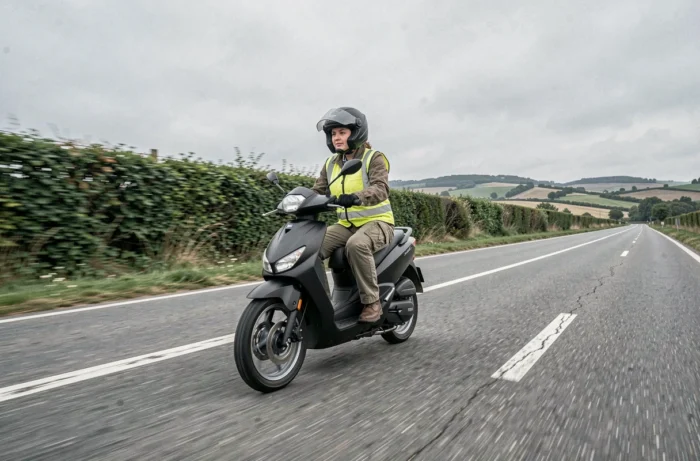
The top speed measured on a test bench or on a long downhill stretch has nothing to do with the usable cruising speed in daily use. On a 125 scooter, the realistic cruising speed is significantly below the theoretical maximum.
The Yamaha Tricity 125, for example, is considered comfortable around 90 km/h in regular use, despite a higher top speed. A 125 cm³ single-cylinder engine run at full throttle for several minutes heats up, vibrates, and consumes disproportionately. Riding at maximum speed on a 125 means using 100% of the engine continuously, whereas a car or a larger displacement motorcycle only uses a fraction of its power.
This distinction explains why user feedback on fast roads is often mixed. The engine maintains speed on flat terrain, but the slightest incline or gust of crosswind drops the speed by several km/h. The rider compensates by opening the throttle fully, which tires both the mechanics and the rider.
Parameters That Reduce Usable Actual Speed
- Carried weight: when riding two-up, a Piaggio Liberty 125 loses about 10 to 15 km/h compared to its top speed when solo, according to available tests. The payload plays a role comparable to a loss of power.
- Headwind: on fast roads, a gust at 30 km/h significantly reduces actual speed on a scooter with limited aerodynamics, narrow fairing, and an upright seating position.
- The condition of the variator and belt (on CVT scooters): a worn belt or a clogged variator can cost several km/h at top speed, without the rider realizing it immediately.
- Altitude and ambient temperature: an atmospheric engine loses efficiency as the air thins. In the mountains or during high heat, maximum speed decreases.
125 Scooter on Fast Roads: Mechanical Limits to Know
The question “can you maintain 110 km/h on a fast road with a 125?” comes up constantly. The technical answer is nuanced. Solo, on flat ground, with no wind, most recent 125 scooters can achieve this, but with almost no margin.
A 125 cm³ engine typically develops around 10 to 15 hp depending on the model. At 110 km/h actual speed, this engine runs at a speed close to its red zone. The power reserve for overtaking or accelerating is practically nonexistent. Any additional demand (overtaking, uphill stretch) forces the engine to operate beyond its comfort range.
We recommend considering the realistic cruising speed as the true indicator of road performance for a 125 scooter, not the advertised top speed. A model capable of cruising comfortably at 100 km/h GPS with engine margin will be safer and more enjoyable than a scooter that barely reaches 115 km/h while straining the mechanics.
Mechanical Maintenance and Speed Loss on a 125 Scooter
A new 125 scooter and a scooter with 15,000 km do not run at the same speed. The gradual degradation of certain components reduces the actual maximum speed without triggering a check engine light.
The CVT transmission belt is the primary factor. Its wear alters the effective transmission ratio and causes a loss of speed at the top of the speedometer. The variator rollers also wear out and change the variation range. Replacing the belt and rollers often restores several km/h of top speed.
A clogged air filter reduces the intake airflow and leans out the mixture. A worn spark plug degrades combustion quality. These elements, often overlooked on urban scooters whose maintenance is limited to oil changes, have a measurable impact on high-rev performance.
Tire pressure also plays a role. A under-inflated tire increases rolling resistance and can cost a few km/h, in addition to degrading handling. Checking the pressure every two weeks remains an uncommon habit among 125 scooter users.
The gap between the manufacturer’s specifications and the road does not only stem from the speedometer bias. It results from an accumulation of factors, from factory calibration to mechanical wear, as well as riding conditions. Taking into account GPS speed, the condition of the transmission, and the carried load provides a much more accurate picture of what a 125 scooter can actually offer in daily use.