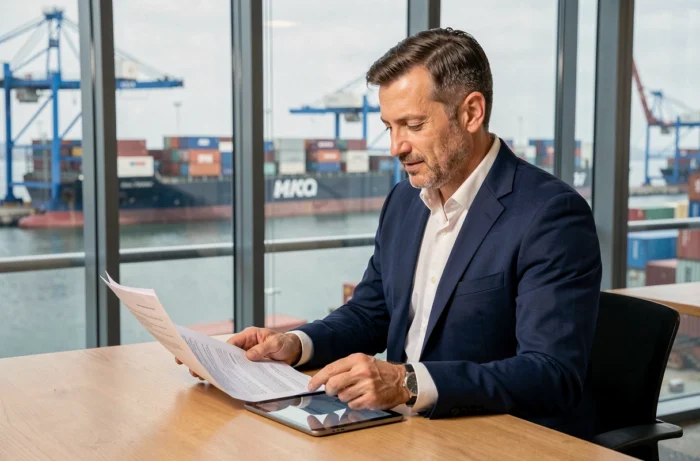
A port carrier ensures the physical movement of goods between the ship and storage or shipping areas within a port. Its scope covers dock handling, loading and unloading of cargo, as well as transfer to land freight platforms. Choosing the right provider for these operations is crucial for the smoothness of the entire logistics chain, from the maritime terminal to the final recipient.
Role of the port transport broker: a technical, not commercial intermediary
The transport broker does not own trucks, cranes, or storage spaces. Their activity consists of connecting a shipper (or importer) with port carriers whose capacities, specialties, and pricing constraints they know.
This distinction is fundamental. A broker assesses the compatibility between the type of goods (bulk, container, oversized cargo) and the actual means of the carrier. They verify certifications, insurance coverage, and operational capacity before proposing a shortlist.
To quickly identify reliable intermediaries in the port freight sector, SDN Rennes brokers list professionals categorized by specialty and geographical area, allowing filtering of providers based on concrete operational criteria.
The broker also absorbs part of the administrative burden: requesting multiple quotes, comparing general conditions, verifying approvals. For a company that ships occasionally or is discovering a new port, this time-saving is measurable.
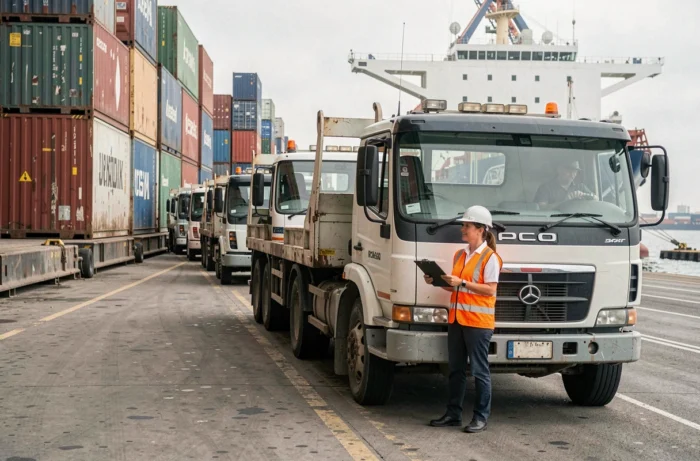
Technical criteria for evaluating a port carrier
Comparing port carriers without a framework is like comparing incomparable quotes. Several criteria structure a serious evaluation.
- Type of handling mastered: a carrier specialized in dry bulk (grains, ores) does not have the same equipment as a container or refrigerated goods operator. Verifying the adequacy between available equipment and the nature of the shipped products avoids additional subcontracting costs at the dock.
- Insurance coverage and compensation limit: policies vary by operator. A carrier may cover port handling but exclude damages occurring during buffer storage in the port area. The broker can require certificates and compare exclusions.
- History of punctuality and management of contingencies: port delays have cascading effects on maritime shipments and downstream land transport. A provider with reserved slots or established relationships with the port authority limits this risk.
- Ability to absorb peaks in volume: some companies ship seasonally. A carrier sized for a regular flow may become saturated during peak periods, leading to cargo delays.
Transport insurance, a often undervalued criterion
Risk management for goods does not stop at the maritime crossing. Port handling phases concentrate a significant share of claims, particularly impacts during the transfer between ship and dock. A specialized broker knows how to identify coverage gaps and direct towards carriers whose insurance explicitly covers loading and unloading operations.
Port access control in France: what changes for shippers
A decree that came into effect in July 2026 has tightened checks in controlled access port areas. Checks now focus on access titles, identities, vehicles, luggage, and the goods themselves.
For a shipper, this regulatory evolution has a direct impact on the choice of provider. A port carrier familiar with the new security procedures reduces the risk of blockage at the terminal entrance. Additional formalities extend processing times if the carrier has not anticipated the required documents.
The broker acts here as a filter: they can verify that the carrier has up-to-date authorizations, that their drivers and operators are registered with the port authority, and that their internal procedures incorporate the requirements of the decree of July 8, 2026.
Port governance and regulatory environment
Decree No. 2026-732 of August 1, 2026, modernized the operation of major French maritime and river-maritime ports. This reform reflects a changing regulatory environment, where the rules of consultation among port actors are evolving. A broker who follows these institutional changes better anticipates the operational constraints that may affect timelines or access conditions to terminals.

Methodology for working with a port freight broker
Entrusting the selection of a carrier to a broker does not exempt one from preparing a precise specifications document. The broker works better when the parameters are clear from the outset.
Three elements accelerate the process: the exact nature of the goods (dimensions, weight, customs classification, sensitivity to shock or temperature), the port of origin and the destination port, and the expected frequency of shipments.
A specialized broker compares at least three port carriers for each request. This competition concerns price, but also pickup times, insurance conditions, and availability of handling slots.
The broker also negotiates contractual conditions. For regular volumes, they often obtain preferential rates or service commitments (guaranteed timelines, loading priority) that a single shipper would not achieve.
Limits of using a broker
The broker receives a commission, usually included in the carrier’s rate. For companies that ship in very large volumes with direct annual contracts with a port operator, the intermediary may not provide sufficient added value. The broker is most useful for occasional shipments, new markets, or atypical cargo where knowledge of the local transport network makes a difference.
The choice of a port carrier is based on technical criteria that mere price comparison does not cover. The recent tightening of access controls in French ports adds a layer of administrative complexity that reinforces the interest in an intermediary capable of filtering providers based on concrete operational criteria, not just on price per container.