
A mature pustule with a clearly visible white dome indicates a collection of dead neutrophils, bacteria (primarily Cutibacterium acnes), and cellular debris trapped in the follicle. The temptation to manually empty it is strong, but managing this pustule directly affects the risk of scarring. Here’s how to reduce inflammation without compromising the dermis.
Facial Danger Triangle: An Area Where Manual Drainage is Prohibited
The area between the corners of the lips and the root of the nose, known as the danger triangle, has a vascular peculiarity that most beauty articles overlook. The veins in this region lack valves and communicate directly with the cerebral cavernous sinuses.
Puncturing a pustule in this area creates a bacterial entry point into a venous network that drains toward the brain. The risk, although rare, includes cavernous sinus thrombosis, a neurological emergency. We recommend never attempting manual drainage on a pus-filled pimple located in this triangle, regardless of its apparent maturity.
For pustules located elsewhere on the face, the action remains inadvisable without sterile equipment. The pressure applied with fingers pushes some of the purulent content deeper into the dermis, worsening inflammation and promoting the formation of a atrophic or hypertrophic scar. The only technique to eliminate a pus-filled pimple without sequelae relies on an approach that respects the natural inflammatory cycle of the lesion.

Localized Topical Treatments: Salicylic Acid, Benzoyl Peroxide, and Hydrocolloid Patches
Three active ingredients dominate the outpatient management of an isolated pustule. Their mechanisms of action differ, and the choice depends on the stage of the lesion.
Benzoyl Peroxide on Active Pustule
Benzoyl peroxide is a bactericidal agent that releases oxygen upon contact with the skin, destroying the anaerobic bacteria in the follicle. Applied in a thin layer directly on the pustule, it reduces the bacterial load and accelerates resolution. The lowest concentrations are sufficient for an isolated pimple, with higher dosages increasing irritation without significant benefit on a single lesion.
Salicylic Acid for Keratolytic Drainage
Salicylic acid is lipophilic, allowing it to penetrate the sebum accumulated in the clogged pore. It dissolves the corneocytes that form the follicular plug, facilitating the natural evacuation of pus to the surface. This keratolytic mechanism avoids mechanical pressure and preserves the integrity of the follicular wall.
Hydrocolloid Patch: Passive Absorption of Content
The hydrocolloid patch, originally designed for wound healing, absorbs purulent exudate by capillarity. Placed on an open or ready-to-drain pustule, it creates a moist occlusive environment that promotes healing. It also prevents finger contact with the lesion, reducing the risk of superinfection.
- Apply the patch on clean, dry skin, preferably in the evening, and leave it in place for several hours without peeling it off to check progress.
- Replace the patch when it turns white, indicating it has absorbed the maximum amount of exudate.
- Do not combine a patch with an active topical treatment underneath (benzoyl peroxide, retinoid), as occlusion can enhance irritation.
Reducing the Risk of Post-Inflammatory Scarring on Acne-Prone Skin
The scar that follows a pus-filled pimple is rarely related to the pimple itself. It results from an excessive inflammatory response and, in most cases, from repeated manipulations. Not touching the lesion remains the most effective measure against residual marks.
Post-inflammatory hyperpigmentation, that brown or purplish spot that persists after the pimple has disappeared, is a common sequela in darker phototypes. It is not a scar in the strict sense, but a deposit of melanin triggered by inflammation. Strict sun protection during the weeks following the resolution of the pimple significantly limits its intensity.
For atrophic scars (type “ice pick” or “boxcar”), prevention follows a simple principle: any manipulation that prolongs inflammation worsens collagen loss. Recent European recommendations on acne emphasize the need to shorten the duration of inflammation and reduce the frequency of scars, which contradicts approaches based on aggressive drying or repeated puncturing.
Warm Compress: The Technique That Accelerates Maturation Without Damaging the Dermis
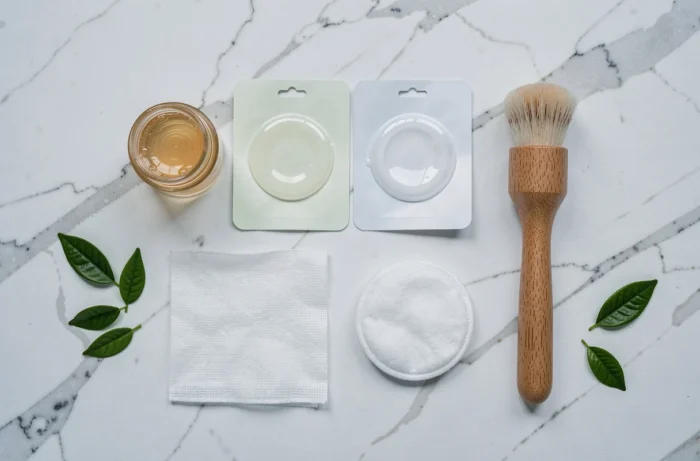
Before applying a topical treatment, the warm compress is the first step. Local heat dilates capillaries, increases the influx of leukocytes, and softens the corneal plug that traps the pus.
- Use a clean cloth soaked in warm water (not scalding) and apply it to the pustule for ten to fifteen minutes.
- Repeat two to three times a day until spontaneous drainage of the lesion occurs.
- Never compress or press the area after the compress, even if the pimple seems ready to drain.
- Disinfect the area with a mild antiseptic after each application if any oozing appears.
This approach is particularly suitable for deep pustules that do not respond immediately to topicals. The warm compress accelerates natural maturation and allows the purulent content to migrate to the surface without rupturing the follicular wall into the deep dermis.
When to Consult a Dermatologist for a Persistent Pus-Filled Pimple
An isolated pustule that does not regress after a week of localized treatment warrants medical advice. A dermatologist can perform an intralesional corticosteroid injection, which reduces inflammation within hours without mechanical trauma. This quick and minimally painful procedure is reserved for large lesions or those at high risk of scarring.
Recurrent pus-filled pimples, beyond the occasional imperfection, often indicate inflammatory acne that justifies systemic treatment. Recent European recommendations favor early management combining topical retinoids and antimicrobial agents to shorten the overall duration of inflammation and limit skin sequelae.
A pus-filled pimple that resists local treatments is not a cosmetic problem to be solved with a more potent home remedy. It is an inflammatory signal that calls for differential diagnosis (furuncle, cyst, abscess) and, if necessary, appropriate treatment for the underlying pathology.