You diffuse lavender in your living room, you put a few drops on your children’s pillows, and one day you come across an alarming article: lavender could be an endocrine disruptor. Concern sets in. However, this claim deserves close examination, as the scientific reality is much more nuanced than sensational headlines.
What science really blames on linalool and linalyl acetate
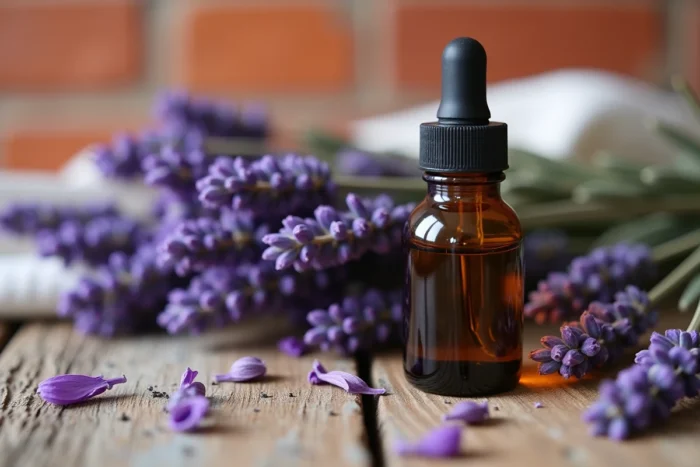
When we talk about lavender and endocrine disruption, we are not talking about the plant itself. We are talking about two molecules present in its essential oil: linalool and linalyl acetate. These compounds also exist in dozens of other plants (thyme, basil, bergamot).
In 2019, an American team (Ramsey et al.) observed that these molecules, tested in isolation on laboratory cells, could mimic the action of estrogens and inhibit that of androgens. It is this type of result that fueled the controversy.
The problem is the gap between an in vitro test and the reality of daily use. A cell bathed in a pure molecule does not replicate what happens in a living organism. The human body metabolizes, eliminates, and dilutes substances absorbed through the skin or respiratory pathways. No clinical study has confirmed an endocrine disrupting effect in humans at common exposure doses.
To better understand the risks of lavender as an endocrine disruptor, it is essential to distinguish what laboratory studies show from what a person actually experiences when using a few drops of essential oil.
Gynecomastia in boys: the case that triggered everything
You may have read that young boys developed gynecomastia (abnormal growth of breast tissue) after exposure to lavender. This information circulated widely in the mainstream press.
Let’s return to the facts. The reported cases involved children repeatedly exposed to products containing lavender or tea tree. The number of cases remained very low, and the implicated products were not pure essential oil. One of the most cited products was a cologne based on scented synthetic fragrances of lavender, not natural essential oil.
This confusion between a chemical product scented with lavender and an essential oil obtained through distillation changes the entire analysis. Synthetic fragrances contain phthalates and other substances whose endocrine disrupting nature is much better documented than that of natural linalool.
The cases of gynecomastia do not prove that lavender essential oil is an endocrine disruptor. They show that repeated exposure to certain scented products can pose a problem, which is very different.
hPlacentox Test: Results that Contradict the Initial Alert
A test developed by the CNRS-CITCoM laboratory, called hPlacentox, has allowed for testing the endocrine disrupting activity of several essential oils on human placental models. The results deserve attention.
According to Professor Patrice Rat, the main inventor of the test, the essential oils tested, including lavender, did not show the harmful effects observed with established endocrine disruptors such as bisphenol A or phthalates. The test also revealed a point often overlooked: an isolated component does not behave the same way as when it is in the complete mixture of the essential oil.
This discovery calls into question the entire logic of studies that test linalool alone and deduce a danger for the entire essential oil. The synergy among the dozens of molecules present in an essential oil modifies the toxicological profile of each component taken individually.
European Regulation and Lavender Essential Oils: What Changes
Beyond the scientific debate, the European regulatory framework is evolving. Delegated Regulation (EU) 2023/707 has introduced six new hazard classes including endocrine disruption into the CLP classification system. The definition retained relies on three cumulative criteria:
- Demonstrated endocrine activity based on experimental data
- Observable harmful effects on human health or the environment
- A biologically plausible causal link between the activity and the effect
This framework applies to all substances, including plant extracts. Essential oils used in cosmetics or household products are therefore potentially affected. Deadlines between 2026 and 2028 will impose new reporting and labeling obligations for mixtures containing these substances.
For lavender, this evolution does not mean a ban. It means that manufacturers will have to prove the absence of endocrine disrupting activity according to specific criteria, which could paradoxically reassure consumers if the tests turn out negative.
Concrete Precautions for Using Lavender Safely
The current state of knowledge does not justify eliminating lavender from your daily life. A few common-sense precautions are sufficient, especially for sensitive populations.
- For children under three years old and pregnant women, limit direct skin application of lavender essential oil as a precaution
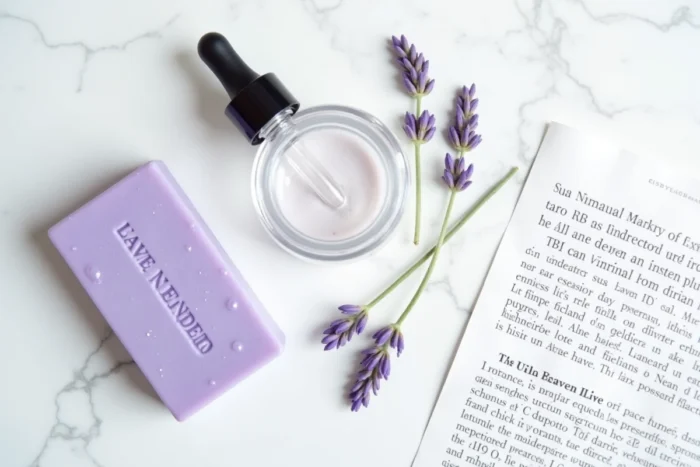
- Prefer pure and certified essential oils over scented products that may contain truly problematic synthetic molecules
- Respect recommended dosages: a few drops diluted in a carrier oil, not half a bottle in the bath
- Check the complete composition of cosmetic or household products labeled “lavender,” as synthetic fragrance is often predominant
The real risk comes from industrial products scented with lavender, not from the essential oil itself. A bottle of true lavender essential oil (Lavandula angustifolia) obtained through distillation contains neither phthalates nor suspicious preservatives.
The controversy surrounding lavender illustrates a recurring pattern: a preliminary study on isolated cells is amplified by the press, then contradicted by tests closer to biological reality. The European regulatory framework, by imposing solid evidence before any classification, should provide clearer answers in the coming years. In the meantime, a quality essential oil, used judiciously, remains one of the least concerning products in your bathroom.